Views: 142 Author: Site Editor Publish Time: 2026-07-06 Origin: Site


Prototyping and custom mold-making often hit a wall of complexity. Creators face a steep barrier when dealing with messy liquids, vacuum degassing chambers, and complex weighing scales. You need a fast, user-friendly way to create durable molds without heavy equipment overhead. Traditional pourable liquid silicones slow down rapid iteration cycles. They also require expensive mold boxes and meticulous preparation.
A Silicone putty offers a brilliant alternative. It is a two-part, platinum-cure system designed for immediate, bubble-resistant impression molding. You simply mix it by hand and apply it directly to your object. We will explore how to evaluate, select, and implement this material. You will learn to assess it based on technical specifications, FDA compliance, and your specific project scope.
Form Factor Advantage: Moldable silicone putty eliminates the need for vacuum degassing and mold boxes, reducing setup time and material waste for simple one-part molds.
Technical Baselines: Standard putties utilize a 1:1 by volume or weight mixing ratio and generally cure to a Shore A hardness of 25–40.
Compliance Considerations: Not all putties are food-safe; specific FDA-compliant platinum-cure formulations are mandatory for culinary applications.
Implementation Risks: While beginner-friendly, putty is highly susceptible to cure inhibition from sulfur-based clays, latex gloves, and certain UV resins.
A platinum-cure framework serves as the foundation for high-quality impression materials. This addition-cure system relies on two parts. You have a Part A base and a Part B catalyst. You must blend them together to trigger a chemical reaction. This specific chemistry offers significant advantages over older tin-cure formulas. It does not shrink upon curing. It delivers exceptional tear strength. The final mold also boasts a long library life. You can store these molds for years without them degrading or weeping oils.
You must understand the difference between working time and cure time. Working time refers to the pot life of the mixed material. You typically have only 2 to 3 minutes to mix and apply the material. Rapid mixing is an absolute necessity. If you hesitate, the material will stiffen before you capture your impression. Cure time refers to the demold time. This process usually takes 20 to 30 minutes. This rapid turnaround drastically accelerates prototyping cycles. You bypass the agonizing 12 to 24 hour wait required by standard liquid silicones.
Shore A hardness dictates the physical flexibility of your final mold. Manufacturers use this scale to measure rubber hardness. A rating of 25A indicates a highly flexible, soft rubber. You should use softer rubber for delicate items or deep textures. A rating of 40A yields a much stiffer mold. Stiffer molds hold their shape better under the weight of heavy casting materials. However, a 40A mold makes demolding stiff materials difficult. You might struggle to extract rigid resin or plaster pieces from a rigid mold. Always match the Shore A rating to your intended casting material.
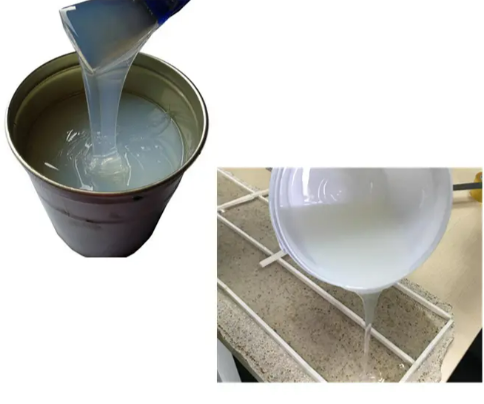
Detail capture separates these two formats dramatically. Pourable liquid silicone easily flows into microscopic crevices. It captures micro-details and navigates deep, complex undercuts effortlessly. A moldable silicone putty behaves differently. It possesses a thick, dough-like consistency. It cannot flow into deep, hidden cavities. However, it excels at capturing shallow surface impressions. You will find it perfect for replicating coins, architectural trim, and flat-backed objects.
Cost and material efficiency play major roles in material selection. Cost scaling behaves differently for each product. The dough-like format proves highly economical for small, single-use molds. It is also ideal for localized repairs. You only mix exactly what you need. However, it becomes cost-prohibitive for large-volume casting. Buying gallons of liquid formula costs significantly less per ounce than buying large buckets of dough.
Equipment requirements define the barrier to entry for creators. The dough format requires almost zero equipment. You only need your hands. Liquid formats demand a much larger setup. You often require mixing cups, wooden stir sticks, and custom-built mold housing. You also frequently need a vacuum chamber to eliminate trapped air bubbles from liquids.
The shortlisting logic is straightforward. Choose the dough format for speed, simple shapes, and low-volume setups. Choose liquid formats for complex, 3D resin casting or high-volume production runs. Review the summary chart below to guide your decision.
Criteria | Moldable Putty | Liquid Silicone |
|---|---|---|
Detail Resolution | Excellent for surface impressions. Poor for deep undercuts. | Superior for micro-details and complex 3D shapes. |
Equipment Needed | None (Hands only). | Cups, sticks, mold boxes, vacuum chambers. |
Speed (Demold) | 20 to 30 minutes. | 12 to 24 hours. |
Best Use Case | Flat-backs, coins, trim, rapid prototypes. | Full 3D figures, large scale production runs. |
Safety and compliance demand strict attention. You will see many brands make broad "non-toxic" marketing claims. Do not rely on marketing buzzwords. You must verify actual compliance if you intend to use the mold for food. Look for verifiable "Food Contact Safe" certifications. The manufacturer should cite FDA 21 CFR 177.2600. This regulation governs rubber articles intended for repeated food contact. This certification is absolutely critical for bakers, chocolatiers, and confectioners.
Yield and coverage estimations prevent frustrating project delays. Under-ordering material ruins projects halfway through the molding process. You need a reliable framework for calculating volume. You measure these materials by weight, but you apply them by volume. A standard 1-pound kit typically yields roughly 25 cubic inches of mixed material.
Kit Size (Total Weight) | Approximate Volume Yield | Typical Application Scale |
|---|---|---|
0.5 lbs (8 oz) | ~12.5 cubic inches | Small jewelry, coins, single cabochons. |
1.0 lbs (16 oz) | ~25.0 cubic inches | Medium trim pieces, multiple small items. |
2.0 lbs (32 oz) | ~50.0 cubic inches | Large architectural details, continuous borders. |
Thermal resistance expands your casting possibilities. Most high-quality platinum formulas handle extreme heat remarkably well. They generally remain safe up to 300°F to 400°F (149°C to 204°C). This temperature range opens up exciting use cases. You can safely cast low-melt metal alloys directly into the impression. You can also press raw polymer clay into the cavity and bake the entire mold in your oven. Always check the Technical Data Sheet (TDS) to confirm exact thermal limits.
Tear strength and longevity determine the true value of your mold. You need to know how many pulls you can realistically expect before degradation occurs. Smooth casting materials like wax or fondant inflict minimal wear. You can easily get hundreds of pulls from a single mold. Abrasive materials shorten mold life significantly. Casting concrete, plaster, or aggressive epoxy resins will eventually degrade the interior surface. You might notice a loss of fine detail after 30 to 50 pulls with harsh materials.
Preparation and environmental factors heavily influence your success rate. Ambient temperature directly impacts your working time. Heat accelerates the curing process dramatically. Working in a hot garage might cut your working time down to just 60 seconds. Cold temperatures retard the chemical reaction. Chilling the parts in a refrigerator before mixing can grant you extra working time. Always prepare your workspace and your master model before you open the containers.
The 1:1 mixing protocol requires precision and speed. Use the following step-by-step guidance to ensure a perfect mix.
Measure equal portions: Scoop exactly equal amounts of Part A and Part B by volume or weight.
Combine the parts: Press the two different colored lumps together in your hands.
Execute the fold and knead technique: Flatten the mass, fold it over onto itself, and press it down.
Maintain a rapid pace: Repeat the folding motion vigorously. You only have a few minutes.
Verify the visual indicator: Stop kneading only when you achieve a completely uniform, streak-free solid color.
Your application technique determines the quality of your final impression. Do not simply smash the mixed lump over the object. This traps air pockets. Instead, flatten the dough slightly. Press it firmly onto the highest central point of your master model. Slowly push the material outward toward the edges. This outward rolling motion forces trapped air away from the object. It ensures the rubber captures maximum surface detail without leaving void bubbles.
Avoiding cure inhibition remains your primary risk factor. Inhibition occurs when surface chemicals halt the platinum-cure reaction. The rubber will stay sticky and messy indefinitely. You must identify known contaminants. Latex gloves cause immediate inhibition. Sulfur-based modeling clays are notorious for ruining molds. Fresh 3D printed UV resins also off-gas chemicals that block curing. Certain adhesives and masking tapes cause similar failures.
You can easily deploy effective workarounds. Never wear latex; use nitrile gloves instead. You can also mix bare-handed if you wash your hands thoroughly first. If you must mold a sulfur clay sculpture or a fresh UV resin print, apply a barrier coat. Sealing the master model with a thin, even coat of acrylic spray paint prevents the chemical interference.
Resin casting and jewelry making benefit hugely from this material. Crafters require fast turnaround times for custom pieces. You can rapidly create custom bezels. You can mold small cabochons and simple polyhedral shapes in minutes. The resulting molds feature a naturally glossy interior if the master model was glossy. This yields brilliant, shiny epoxy resin casts.
Culinary and confectionery arts utilize these molds heavily. Chefs create custom fondant textures for wedding cakes. Chocolatiers design unique geometric chocolate molds. Sugar artists cast boiling isomalt directly into the heat-resistant cavities. You must ensure absolute FDA compliance before using any material in a commercial kitchen.
Architectural and antique restoration rely on non-destructive impression techniques. Restorers often encounter damaged historical molding or rare cabinet hardware. They cannot remove these fixtures from the site. This dough-like material solves the problem. A restorer can press it directly onto the vertical surface of the wall or door. It captures a perfect impression on-site without dismantling delicate fixtures.
Rapid prototyping environments leverage temporary molds constantly. Engineers frequently need to test a part's physical fitment before committing to expensive tooling. They can create quick molds to cast urethane test parts. This allows them to verify dimensions and tolerances before moving to CNC machining or injection molding.
Moldable silicone putty remains the optimal choice for speed, convenience, and simple impression molding. It drastically lowers the barrier to entry for creators and engineers. You avoid the messy complexities of liquid formulas and degassing equipment. However, you must respect its limitations. It works best when you strictly adhere to its brief working time limits and understand its constraints regarding deep undercuts.
Assess your master model carefully as your next step. Look at its complexity, depth, and overall size. Calculate your required volume based on these dimensions. This assessment determines whether a small 1-lb kit suffices or if you require a larger bulk order.
Prioritize high-quality, platinum-cure formulations with strong tear-strength ratings. Always explicitly check for food-grade FDA certifications if your end-use involves any consumables. By preparing your workspace and avoiding known chemical contaminants, you will achieve flawless, durable molds every time.
A: No. Once the two parts cross-link and cure, the mold becomes permanent. You cannot melt it down or reshape it. However, the finished mold itself is highly durable. You can use it dozens to hundreds of times to cast new items.
A: Sticky material indicates either cure inhibition or improper mixing. Contact with sulfur-based clays, latex gloves, or fresh UV resins halts the chemical reaction permanently. Alternatively, failing to mix the 1:1 ratio thoroughly leaves unreacted base or catalyst in the dough.
A: You eliminate air bubbles through proper application technique. Do not smash the dough flat over the object. Knead it correctly by folding it inward. Then, press it firmly onto the center of your object and push outward to displace trapped air effectively.
A: Yes, most platinum-cure formulas are highly heat resistant. They easily withstand temperatures up to 400°F (204°C). This makes them perfectly safe for standard polymer clay baking temperatures. Always verify the exact temperature limits on the manufacturer's Technical Data Sheet.


