Views: 132 Author: Site Editor Publish Time: 2026-05-30 Origin: Site


Creating sensory toys, prosthetics, or tactile art requires a very specific material texture. You want an end product yielding a soft, doughy, or extremely pliable feel. Generic craft supplies rarely deliver this distinct texture.
Standard commercial silicone rubber is often too rigid for tactile applications like Taba squishies or specialized sensory tools. When creators try to use generic molding silicones, they routinely end up with failed prototypes or highly rigid, unusable end products. The industry demands materials offering intense flexibility and specific surface finishes.
You need to identify the precise base materials, chemical modifiers, and curing agents required to achieve extreme softness without compromising structural integrity. This guide evaluates platinum-cure versus tin-cure systems. It compares commercial kits to raw chemical mixing. Finally, we break down the specific additives you must use to control hardness and surface tackiness.
Achieving a highly tactile, squishy feel requires targeting a Shore hardness of 00-30 or lower (often 00-10 or 00-00).
Platinum-cure squishy silicone rubber is the industry standard for skin safety, durability, and lack of shrinkage, though it is highly susceptible to cure inhibition.
"Deadeners" or silicone softeners are essential additives to lower the hardness and create a sticky or dough-like hand-feel.
Evaluating materials requires balancing cost, degassing requirements (vacuum chambers), and end-user safety compliance.
To make squishy items, your base material must inherently fall on the Shore 00 or Shore 000 hardness scale. Standard industrial silicones typically use the Shore A scale. Shore A materials produce rigid items like shoe soles or car tires. You need softer materials. Shore 00 materials mimic human skin, gel pads, or gummy candies. True Squishy Silicone requires ratings between Shore 00-10 and Shore 00-00.
Platinum-cure systems represent the professional standard for tactile applications. They utilize a platinum catalyst to trigger the curing process. This chemical reaction produces no byproducts.
Pros: These systems offer excellent longevity. They exhibit practically zero shrinkage over time. They remain skin-safe when fully cured. Manufacturers generally formulate them to meet food-grade capabilities.
Cons: They carry a higher initial cost. They display extreme sensitivity to sulfur, latex, and certain UV resins. Exposure to these elements causes irreversible cure inhibition.
Evaluation Criteria: You should select platinum systems for consumer-facing products. They work best for high-end sensory toys and professional prototyping.
Tin-cure systems rely on ambient moisture to cure. The chemical reaction releases a small amount of alcohol. This release causes the material to shrink as it ages.
Pros: Tin-cure options feature a lower cost. They are highly forgiving regarding cure inhibition. You can safely pour them over sulfur-based modeling clays.
Cons: The final product shrinks over time. These systems have a shorter library life. They tear easily. They are neither skin-safe nor food-safe.
Evaluation Criteria: You should reserve tin-cure systems for temporary molds. Do not use them as the final squishy product itself.
Feature | Platinum-Cure Silicone | Tin-Cure Silicone |
|---|---|---|
Curing Mechanism | Addition cure (Platinum catalyst) | Condensation cure (Tin catalyst) |
Shrinkage | Virtually none | Noticeable over time |
Skin/Food Safety | Yes (when fully cured) | No |
Inhibition Risk | High (Sulfur, Latex, UV resin) | Low |
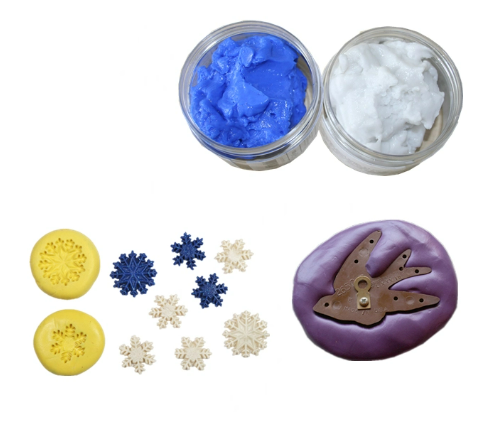
Buying a base squishy silicone rubber rarely provides the trending dough-like texture out of the bottle. You must formulate the exact tactile response using chemical modifiers. Modifiers alter the fundamental structure of the cured piece.
Standard soft silicones behave like rubber bands. You stretch them, and they snap back instantly. Deadeners change this behavior completely.
Functionality: Deadeners alter the silicone's molecular structure. They eliminate the material's structural "memory" or snap-back. Adding this modifier creates a doughy, highly squishy silicone texture. The final piece mimics human fat tissue or bread dough.
Ratio Evaluation: You control the softness through precise ratios. Adding up to 50-100% deadener by weight drastically alters the output. Adding too much modifier results in a sticky puddle. Adding too little retains unwanted rigidity. Always run small batch tests to find your preferred ratio.
Some creators try to use thinners instead of deadeners to save money. You must understand the distinct chemical differences between these two approaches.
Functionality: Silicone oil lowers the mixed viscosity. This makes the liquid easier to pour. It inherently softens the cured rubber slightly.
Risk Assessment: You must strictly limit oil usage. Adding more than 10% silicone oil causes a defect called "leeching." The oil sweats out of the cured piece over time. This degrades the product's lifespan. It leaves a permanent greasy residue on the user's hands or desk.
Modern sensory toys often feature a sticky exterior. Achieving the trending "sticky feel" requires careful formulation. You need specific deadener ratios. Alternatively, you can leave the silicone slightly under-cured via precise additive control.
If you desire a smooth finish, you must process the final piece. Powdering the cured item removes surface tackiness. Creators typically use cornstarch, talcum, or cosmetic mica powders. Brush the powder onto the sticky surface. Wash off the excess under running water. The resulting piece feels velvet-smooth.
Creators face a major purchasing decision before starting a project. You can buy pre-packaged kits, or you can purchase industrial chemical components. Each path carries specific operational realities.
Many online marketplaces sell heavily marketed DIY kits. You often see these options on TikTok Shop or Amazon.
Pros: They feature pre-measured ratios. Most kits use a simple 1:1 volume mix. They present a low barrier to entry. You need no complex chemical math or specialized scales.
Cons: They carry a very high cost-per-ounce. You have extremely limited control over the final hardness. Most critically, they hide unknown chemical origins. This creates a potential safety liability for sellers.
Professional makers purchase base silicones and deadeners directly from chemical manufacturers like Smooth-On or Polytek.
Pros: You gain ultimate control over Shore hardness. This method remains highly scalable for bulk manufacturing. You receive verifiable safety data sheets (SDS) to guarantee consumer safety.
Cons: You face a steeper learning curve. This method often requires a precise gram scale. You also need a vacuum degassing chamber to remove trapped air bubbles effectively.
Decision Chart: Kits vs. Industrial Components | ||
|---|---|---|
Criteria | Commercial 1:1 Kits | Industrial Components |
Ease of Use | High (Pour and mix by volume) | Low (Requires weight calculations) |
Customization | Fixed hardness | Infinite tactile adjustments |
Safety Transparency | Often lacking SDS documentation | Full TDS/SDS availability |
Equipment Needed | Stir sticks, plastic cups | Gram scale, vacuum chamber |
Working with unmixed chemicals requires strict safety protocols. Cured silicone remains chemically inert. However, the liquid components pose specific handling risks.
You must evaluate materials based on independent certifications. Look for the ACMI AP seal or verified skin-safe certifications. Do not rely on marketing buzzwords. Uncured silicone components can cause severe contact dermatitis. Never touch mixed liquid silicone with your bare hands. Wait until the chemical reaction finishes completely before handling the product.
Your environment directly impacts the curing reaction. Room temperature control is critical. You should maintain a workspace at roughly 73°F (23°C).
Warmer temperatures drastically reduce pot life. The pot life defines your active working time. If your room hits 85°F, a 30-minute pot life might shrink to 10 minutes. The material will cure inside your mixing cup.
Check ventilation requirements based on your chosen catalyst system. Platinum systems emit no harsh fumes. Tin systems emit alcohol vapors. Always work in a well-ventilated area regardless of the system.
Proper gloves are mandatory. You must wear nitrile gloves. Do not wear latex gloves. Latex contains sulfur compounds. Touching platinum silicone with latex gloves will cause immediate cure inhibition. Protect your clothing and work surfaces, as liquid silicone bonds aggressively to porous fabrics.
Even experienced creators ruin batches of expensive silicone. You need to anticipate and mitigate the two most common fabrication failures: chemical inhibition and trapped air.
Cure inhibition represents the most frustrating failure point. You mix the materials perfectly. You wait the required 12 hours. You open the mold. Instead of a solid piece, your platinum squishy silicone remains a sticky, gooey, uncured mess. The silicone failed to cross-link.
Identify and banish these common culprits from your workspace:
Sulfur-based modeling clays: Never use plasticine clays to sculpt your masters. Use sulfur-free clay exclusively.
Latex materials: Ban latex gloves and latex rubber bands from your pouring station.
Masking tape adhesives: Many cheap adhesives contain sulfur. Use pure acrylic tapes or specialized mold-making tapes.
UV-cured 3D printing resins: Standard 3D printed molds poison platinum silicone. You must thoroughly post-cure the resin and apply a specialized clear coat before pouring silicone over it.
Extremely soft silicone mixtures easily trap air bubbles during the mixing phase. Deadeners make the mixture highly viscous. Trapped air ruins the appearance and structural integrity of the final piece.
Solution A: Using a vacuum chamber. This remains the ideal method. You place the mixed cup inside the chamber. The vacuum pulls the air out of the liquid before you pour. This guarantees transparent, professional finishes.
Solution B: High-pour techniques. If you lack budget for a vacuum chamber, use low-viscosity materials. Mix the components slowly. Hold your mixing cup high above the mold. Pour a very thin, long stream into the lowest point of the mold. The thin stream stretches the liquid and pops large air bubbles naturally.
Selecting your materials requires a logical elimination process. Do not buy chemicals randomly. Follow these steps to determine your exact needs.
First, analyze the required tactile response. Is the product meant to be stretched forcefully and return to its original shape? If yes, you need a pure Shore 00-10 or Shore 00-20 silicone without deadener.
Is the product meant to feel doughy, tacky, and slow to recover? If yes, you require heavy deadener ratios. You must budget for both the base rubber and the slacker additive.
Evaluate your current workshop setup honestly. Do you have a digital gram scale and a vacuum chamber?
If yes, opt for industrial components. You will save money long-term and produce superior products. If no, you should opt for 1:1 commercial kits. You can combine these kits with a small percentage of silicone thinner to increase softness without buying expensive equipment.
Avoid buying gallon-sized buckets immediately. Purchase a small trial unit (pint size) of a Shore 00-20 platinum silicone. Purchase a corresponding silicone deadener.
Run gradient tests to find your perfect formula. Mix three small paper cups. Add 10% deadener to cup one. Add 20% deadener to cup two. Add 30% deadener to cup three. Let them cure completely. Handle the samples. You now possess physical benchmarks to guide your bulk material purchase.
Making squishy silicone is not a single-material purchase. It remains a complex formulation process balancing base hardness with precise deadening additives.
Always choose platinum-cure systems for tactile products requiring skin safety and long-term durability.
Keep your workspace free of latex, sulfur, and uncured UV resins to prevent catastrophic cure inhibition.
Rely on technical data sheets (TDS) and safety data sheets (SDS) over generalized product marketing. Proper documentation ensures repeatable, safe, and professional results.
Start your manufacturing journey by conducting small gradient tests before committing capital to bulk materials.
A: Your mixture likely suffered cure inhibition. Platinum silicone fails to cure when exposed to sulfur, latex gloves, or certain UV 3D-printing resins. Improper mixing ratios or a workspace temperature far below 73°F (23°C) can also stall the curing process. Always measure accurately and use sulfur-free tools.
A: No. Baby oil causes chemical incompatibility. While it temporarily softens the rubber, it refuses to bind with the silicone matrix. This creates severe leeching risks. The baby oil will constantly sweat out of the cured piece, ruining the toy and leaving oily stains on surfaces.
A: You must measure deadener by weight using a digital gram scale. Do not measure by volume. The specific gravity of the deadener differs from the base silicone. Check your manufacturer's technical data sheet (TDS) for the exact weight ratios required for your desired softness.
A: No. Standard hardware store caulk is a tin-cure system. It cannot reach the required Shore 00 extreme softness. Additionally, it emits irritating acetic acid (vinegar smell) during the curing process and shrinks significantly over time. It is unsuitable for tactile sensory toys.


