Views: 161 Author: Site Editor Publish Time: 2026-06-29 Origin: Site


Engineers, manufacturers, and lab technicians must rigorously verify material safety before integrating polymers into demanding environments. High-heat, electrical, and sensitive applications leave no room for error. You must understand material behaviors thoroughly to prevent catastrophic failures.
Inherently, silicone offers exceptional heat resistance. We generally consider it non-flammable under standard operating conditions. However, it is not entirely fireproof. Selecting the wrong formulation can lead to severe thermal degradation. You might also face strict compliance failures or unexpected safety hazards on the production floor.
You need precise data to make safe design choices. This guide breaks down essential thermal thresholds. We explore safety data sheet (SDS) interpretations in detail. You will discover practical evaluation criteria for commercial and industrial use. By the end, you will know exactly how to evaluate material thermal stability for any project.
High Thermal Stability: Most standard silicone putty maintains structural integrity up to 200°C–250°C (392°F–482°F) without igniting.
Flash Point Reality: While highly resistant to combustion, extreme temperatures can cause thermal degradation, releasing non-combustible ash (silica) and trace gases.
Formulation Matters: Additives in specialized thermal or moldable silicone putty can alter the baseline flammability and flash point.
SDS Dependency: Safety protocols must be dictated by the specific manufacturer’s Safety Data Sheet (SDS), particularly regarding two-part (Part A / Part B) curing processes.
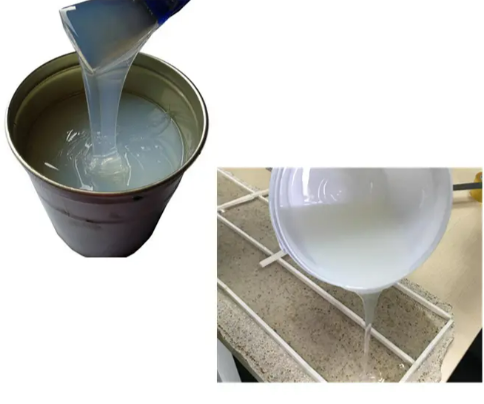
Professionals often confuse these two terms. You must distinguish between them for safe application design. A non-flammable material strongly resists ignition. It does not sustain flames well under normal atmospheric conditions. However, a fire-retardant material contains specific chemical additives. These additives actively slow down or stop the spread of fire. Pure Silicone putty generally falls into the highly flame-resistant category. It will resist ignition effectively. Yet, it will eventually degrade and burn if exposed to continuous, extreme fire.
Understanding practical temperature limits prevents mechanical failures. Most industrial polymers have narrow operating windows. Silicone stands out due to its siloxane backbone. The strong silicon-oxygen bonds provide exceptional stability. You can confidently deploy standard formulations across broad temperature variations.
Typical safe working temperatures range from -50°C to 200°C. Within this zone, the material remains pliable and structurally sound. Beyond 200°C, you enter the thermal stress zone. Once temperatures exceed 250°C, physical properties begin to fail. The putty will exhibit brittleness. It will lose structural adhesion. Eventually, it crumbles into a chalky residue.
Temperature Range | Material State | Safety Evaluation |
|---|---|---|
-50°C to 200°C (-58°F to 392°F) | Stable, pliable, retains full adhesion | Safe for continuous operation |
200°C to 250°C (392°F to 482°F) | Slight hardening, potential minor discoloration | Safe for intermittent exposure |
250°C to 300°C (482°F to 572°F) | Loss of elasticity, severe brittleness, cracking | High risk of mechanical failure |
Above 300°C (572°F) | Thermal degradation, smoke emission, silica ash formation | Material breakdown; potential trace gas release |
What actually happens when extreme heat overcomes the material? Unlike organic plastics, silicone does not melt into a dripping, flaming liquid. Instead, it undergoes a complex thermal degradation process. The material oxidizes rapidly. It transforms into non-combustible silica ash. During this breakdown, it releases carbon dioxide and water vapor. Under extremely high temperatures, trace amounts of formaldehyde might form. You must ensure adequate ventilation if operating near these theoretical failure points.
Manufacturers tweak base formulas to achieve specific handling properties. These alterations directly impact thermal resilience. Standard industrial putty often prioritizes pure temperature resistance. In contrast, two-part moldable silicone putty incorporates specific cross-linking agents. It relies on precise fillers to ensure user-friendly mixing. Sometimes, these necessary fillers slightly lower the overall thermal threshold. You must account for these chemical compromises during your procurement phase.
Different industrial challenges require unique chemical solutions. You cannot use a one-size-fits-all approach. Material scientists engineer variations to solve specific thermal and electrical problems.
Thermally Conductive Putties: Engineers use these in electronics and heat sinks. They contain metal oxides like alumina or boron nitride. These fillers transfer heat efficiently without degrading the polymer base. They help dissipate localized heat spots rapidly.
Electrical Fusing and Insulation Putties: Industrial environments demand strict arc resistance. These putties prevent electrical fires. Manufacturers formulate them to withstand high voltage tracking. They form a self-fusing, highly insulative barrier over exposed connections.
Additives change everything. A purely non-flammable base can become slightly combustible through careless modification. Plasticizers improve flexibility but introduce organic compounds. Colorants provide visual distinction but might lower the flash point. You must investigate the entire chemical makeup. Do not assume all colored or softened putties share the exact same fire rating as the raw base material.
Safety Data Sheets provide the ultimate truth regarding material safety. You must know exactly where to look. Skimming the document often leads to dangerous oversights. Focus your attention on Section 9 (Physical and Chemical Properties) and Section 10 (Stability and Reactivity).
Data Point | What It Means | Why You Need It |
|---|---|---|
Flash Point | Lowest temperature emitting ignitable vapor. | Determines proximity limits to open flames. |
Auto-ignition Temperature | Temperature causing spontaneous combustion. | Dictates maximum ambient heat environments. |
LEL/UEL Limits | Lower/Upper Explosive Limits of airborne gases. | Guides ventilation requirements during curing. |
Two-part systems demand careful handling. You must evaluate Part A (the base) and Part B (the curing agent) independently. Often, the base exhibits complete stability. However, the curing agent might contain reactive compounds. These compounds could present distinct flammability or toxicity risks before mixing. Always review the SDS for both components. Proper storage separation prevents accidental, premature reactions.
Many industrial polymers generate intense heat during the curing phase. Epoxy resins notoriously pose exothermic fire risks if mixed in large volumes. Silicone behaves differently. The cross-linking process in standard putties is highly stable. It generates minimal, often imperceptible, heat. You can mix large batches safely without fearing spontaneous combustion. The fully mixed putty remains chemically inert.
Local laws dictate what you can legally install. You must verify regional regulatory compliance early in the design phase. European markets require strict REACH and RoHS adherence. These frameworks restrict hazardous substances and heavy metals. For strict fire safety, look for Underwriters Laboratories (UL) ratings. The UL 94 standard evaluates flammability of plastic materials. A UL 94 V-0 rating indicates the material stops burning within 10 seconds on a vertical specimen. Securing certified materials simplifies building code approvals immensely.
Modern electronics generate substantial heat. Components fail rapidly under constant thermal shock. Engineers use putty to encapsulate delicate sensors and circuit boards. The material dampens vibrations and seals out moisture. More importantly, it prevents short-circuit fires. If an electrical arc occurs, the putty acts as a highly resilient barrier. It suffocates potential ignition sources immediately.
Artisans and manufacturers rely heavily on customized molding processes. You often cast high-temperature materials into cured molds. Examples include low-melt metals like pewter or highly exothermic polyurethane resins. You must evaluate the thermal risks carefully. The mold must withstand repeated heat cycling. Standard putties excel here. They absorb the sudden heat influx without warping, melting, or igniting.
Heating, ventilation, and air conditioning systems face strict fire-safety codes. Ductwork passes through multiple building zones. You cannot use combustible sealants near heating elements. Professionals apply silicone-based putty to seal gaps around hot pipes. Application in these environments requires materials possessing high thermal conductivity and zero flame-spread characteristics. The putty ensures airtight seals without violating commercial fire regulations.
Before purchasing any polymer, you must map the deployment environment. Blind procurement leads to project failures. Use a systematic approach to identify hidden risks.
Determine Peak Operating Temperature: Record the absolute maximum heat the material will endure. Include potential malfunction scenarios, not just normal operations.
Check Proximity to Open Flames: Identify any nearby combustion sources. Keep non-rated materials far away from direct fire.
Evaluate Chemical Exposure: Some solvents degrade silicone. Compromised polymers lose their inherent thermal resistance rapidly. Identify all environmental chemicals.
Never trust outdated documentation. Safety profiles change as manufacturers update their formulas. You must demand updated, batch-specific technical data sheets (TDS) from your suppliers. Request the SDS for every component. Reputable manufacturers provide these documents willingly. If a supplier hesitates or provides generic, decade-old data, find a different partner. Your project safety depends entirely on accurate chemical disclosure.
Theoretical data only goes so far. You must validate the material under actual working conditions. Run controlled thermal stress tests on small samples. Expose the putty to your specific temperature extremes. Monitor it for brittleness, discoloration, or loss of adhesion. This crucial step prevents massive financial losses. Testing confirms the material behaves exactly as the data sheet promises before total integration into a manufacturing line.
Silicone putty provides exceptional thermal stability. It effectively resists combustion, making it an ideal choice for rigorous industrial and creative applications. While it is not completely immune to extreme fire, its predictable degradation process ensures a high margin of safety.
You must select formulations carefully. Assess your specific environmental risks. Read the safety data sheets thoroughly. Prioritize formulations possessing explicit, certified thermal ratings like UL 94 V-0 if flammability serves as a strict pass/fail criterion for your project.
Do not leave material safety to chance. Consult directly with a material specialist regarding your unique application. Request up-to-date technical data sheets immediately. Order sample kits today to verify thermal performance against your strict project requirements.
A: Silicone putty does not technically "melt" into a liquid; rather, it undergoes thermal degradation and crumbles at temperatures typically exceeding 250°C to 300°C, depending on the specific formulation.
A: Under standard operating temperatures, no. However, if pushed beyond its thermal threshold to the point of combustion, it can release carbon monoxide, carbon dioxide, and trace amounts of formaldehyde.
A: It is not recommended for direct, continuous contact with open flames unless it is a specialized, fire-rated industrial compound. Standard putty will eventually degrade, char, and fail.
A: No. The cross-linking process in silicone is generally highly stable and does not produce dangerous exothermic heat spikes, unlike certain polyurethane or epoxy resins.


