


Navigating industrial chemical safety standards often feels like walking a tightrope for product developers. Modern manufacturers rely heavily on advanced synthetic polymers to achieve peak mechanical and cosmetic performance. However, formulators face constant friction when balancing these high-performance benefits with internal compliance, regulatory scrutiny, and end-user safety concerns. Misinterpreting chemical hazard data can easily lead to costly product recalls, facility accidents, or unjustified fear among consumers.
This article provides procurement teams, engineers, and chemists with a reliable, evidence-based framework to accurately evaluate toxicity data. We aim to clear up common industry confusion surrounding warning labels and exposure limits. You will learn how to decode safety data sheets, understand material compatibility risks, and ultimately shortlist the exact grade of fluid required for your specific application.
Inherent Stability: Pure silicone oil is biologically inert, features an LD50 > 35g/kg (classified as non-toxic), and cannot be absorbed by the human digestive system or skin.
Risk Originates from Additives: Most hazard warnings (flammability, toxicity) on commercial silicone products stem from aerosol propellants (e.g., pentane) or low-molecular-weight manufacturing residues, not the silicone itself.
Grade Determines Safety: The distinction between industrial and food/medical grades lies in purification processes; sourcing FDA Silicone Oil guarantees the removal of harmful catalyst residues.
Application Boundaries: While safe for external contact and mechanical lubrication, silicone oil presents operational challenges, such as swelling in silicone-based equipment parts and high-temp vapor emission.
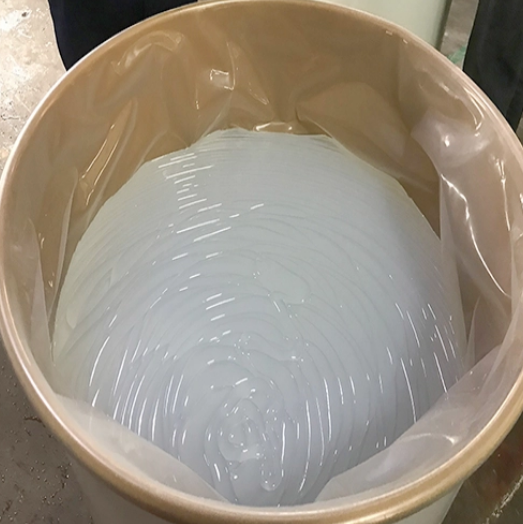
To understand safety profiles, we must first examine the chemical structure. Pure Silicone Oil relies on a strong silicon-oxygen backbone. Chemists refer to this structure as a siloxane bond. This bond is incredibly stable. It requires massive amounts of energy to break down.
People frequently confuse three similar-sounding terms. Silicon is a naturally occurring element. Silica is the compound found in ordinary beach sand. Silicone, however, is a fully synthetic polymer. Manufacturers create it by combining silicon, oxygen, carbon, and hydrogen. This synthetic process yields an extremely unreactive liquid.
Biological non-absorption serves as its primary safety mechanism. Polysiloxane molecules are exceptionally large. They act as a physical barrier. Human skin simply cannot absorb them. The gastrointestinal tract also fails to break them down. If you touch the fluid, it rests on the epidermal layer. It does not enter your bloodstream or cellular tissue.
Authoritative safety ratings consistently back up this chemical inertness. The Environmental Working Group (EWG) maintains a comprehensive cosmetics database. They score pure dimethicone (the most common polysiloxane) with the lowest possible hazard risk. The data shows no evidence of carcinogenicity. It poses no reproductive toxicity. It also fails to trigger allergic immune responses in humans. You can confidently trust these baseline safety metrics for pure grades.
Evaluating raw toxicity data requires looking past complex chemical jargon. Standard toxicological tests measure lethality using the LD50 standard. Pure polysiloxanes feature an LD50 greater than 35g/kg. To put this in perspective, this rating places the fluid firmly in the "non-toxic" category. Accidental ingestion poses no systemic toxicity threat to humans. Your body will simply pass the substance. It may cause a mild laxative effect, but it will not poison your organs.
Dermal and ocular contact scenarios also present very low risks. Material Safety Data Sheets (MSDS) classify the fluid as non-irritating to skin. It acts as a non-sensitizer. You can handle it bare-handed without developing contact dermatitis. Direct eye contact is slightly different. It will not cause permanent corneal damage. However, it may cause temporary, minor conjunctival irritation. You should flush your eyes with water if accidental contact occurs.
Inhalation risks change drastically depending on temperature. At normal room temperature, the inhalation risk remains strictly at zero. The fluid has negligible vapor pressure. It does not evaporate into the air you breathe. Heating the fluid alters this safety profile. Once temperatures exceed 200°C (400°F), the fluid begins to undergo thermal degradation. This process releases minor amounts of formaldehyde vapors.
Best Practice: Always implement active industrial ventilation when heating polysiloxane fluids above 200°C to manage potential vapor accumulation.
Exposure Route | Hazard Classification | Physiological Response | Clinical Guidance |
|---|---|---|---|
Ingestion | Non-Toxic (LD50 > 35g/kg) | Potential mild laxative effect. No absorption. | Do not induce vomiting. Seek medical advice if symptoms persist. |
Dermal (Skin) | Non-Irritating | No immune reaction. Greasy residue remains. | Wash thoroughly using strong surfactants/soap. |
Ocular (Eyes) | Mild Irritant | Temporary redness or conjunctival irritation. | Flush immediately with clean water for 15 minutes. |
Inhalation | Hazardous only > 200°C | Respiratory tract irritation from hot vapors. | Move to fresh air. Use heavy industrial ventilation. |
If the baseline chemistry is harmless, why do so many commercial lubricants feature alarming warning labels? The answer rarely lies in the polymer itself. Secondary ingredients introduce nearly all the reported hazards. You must separate the core fluid from its delivery mechanism.
Aerosol propellants cause the most confusion. A can of silicone spray usually carries an "Extremely Flammable" badge. Buyers often assume the oil catches fire easily. In reality, pure polysiloxane has an exceptionally high flash point. The hazard stems entirely from the aerosol propellants. Manufacturers frequently mix the fluid with cheap solvents like pentane or butane. These solvents propel the liquid out of the nozzle. They are highly flammable. They can also induce extreme dizziness if inhaled in tight spaces.
Manufacturing byproducts represent another hidden risk category. Not all fluids offer the same purity levels.
Low-Molecular-Weight Siloxanes: Cheap industrial grades often skip final purification steps. They retain volatile cyclic siloxanes (like D4 or D5).
Catalyst Residues: The synthesis process requires chemical catalysts. Unrefined batches may trap these harsh decomposition products.
Neutralization Salts: Poor quality control leaves microscopic acidic or basic residues suspended in the liquid.
You may also encounter Prop 65 warning labels on product packaging. California's Proposition 65 mandates warnings for thousands of chemicals. However, these labels often relate to the plastic storage container. They might also flag a specific propellant used in the aerosol mix. They rarely indicate any dermal toxicity associated with the pure oil itself. Always read the specific chemical disclosure on the MSDS to identify the true hazard source.
Not every supplier meets strict safety standards. Procurement teams must look beyond basic viscosity specifications. High-quality suppliers invest heavily in verified purification processes. Vacuum stripping serves as the primary method to remove volatile compounds. This expensive manufacturing step extracts unreacted low-molecular-weight siloxanes. It guarantees the final product remains stable and odorless.
You must apply strict compliance lenses when formulating sensitive products. Industries like cosmetics, pharmaceuticals, and food processing cannot risk using unrefined industrial grades. You must actively specify FDA Silicone Oil for these applications. This premium grade complies with rigorous global standards (such as NSF H1 or GB 30612-2014). Sourcing these certified grades guarantees the complete removal of harmful heavy metals and catalyst residues.
Many buyers hesitate when they see the price premium for certified grades.
Using premium fluids prevents catastrophic product recalls. It avoids facility cross-contamination issues during changeovers. It also ensures rapid regulatory pass-through during compliance audits. The return on investment becomes obvious when you factor in brand reputation protection.
Feature/Metric | Standard Industrial Grade | FDA / Food Grade |
|---|---|---|
Purification Level | Basic filtration. May contain trace residues. | Extensive vacuum stripping. High purity. |
Volatile Content | Higher (contains unreacted cyclics). | Strictly controlled to near-zero levels. |
Primary Use Cases | Mechanical lubrication, mold release, automotive. | Cosmetics, food processing, medical devices. |
Regulatory Risk | High risk if accidentally ingested or applied to skin. | Fully compliant with health and safety standards. |
Cost Profile | Lower upfront cost per bulk drum. | Higher upfront cost; lower total risk cost. |
While safe for human contact, polysiloxane fluids present unique operational challenges. You must understand material compatibility before deploying it in your facility. The "like-dissolves-like" principle is your biggest threat here.
Common Mistake: Never use this fluid to lubricate silicone-based machinery parts. Prolonged contact causes the matching materials to interact aggressively. A silicone O-ring will rapidly absorb the fluid. It will swell to twice its normal size. Eventually, the seal will deform, degrade, and fail completely. Always use compatible materials like nitrile rubber, viton, or Teflon for your gaskets and hoses.
Facility safety and housekeeping also require strict new protocols. The fluid poses a massive physical hazard when spilled. It boasts extreme hydrophobicity. It repels plain water instantly. If a worker spills a small amount on a concrete floor, it creates a severe slip hazard. You cannot mop it up with standard water and floor cleaner. Your maintenance team will need specialized industrial surfactants or absorbent clay to properly remediate a spill.
Evaluators should follow these specific next steps to protect their operations:
Request the Full TDS: Demand the Technical Data Sheet from potential vendors. Verify the specific gravity, flash point, and volatile content percentages.
Audit the MSDS Section 3: Check the "Composition/Information on Ingredients" section. Ensure the product consists of 100% pure dimethicone. Look out for hidden solvents like pentane or petroleum distillates.
Verify Certifications: Do not accept generic "food-safe" claims. Request actual documentation proving NSF H1 registration or FDA compliance.
Test Compatibility: Submerge your facility's specific O-rings and plastic components in a sample batch for 48 hours to check for swelling.
Understanding chemical hazard data empowers your team to make smarter procurement decisions. The data clearly shows pure polysiloxane fluids remain fundamentally safe. They are biologically inert, non-toxic, and environmentally stable. They only pose risks when improperly mixed with aerosol propellants or exposed to extreme thermal thresholds.
Pure grades feature massive molecular structures, preventing human tissue absorption.
Warning labels usually highlight hazards from flammable propellants or cheap solvents, not the pure oil.
Equipment swelling and extreme floor slipperiness remain the primary facility hazards.
Upgrading to certified, pure grades dramatically lowers your Total Cost of Ownership.
Take action today by auditing your current supplier's purity standards. Pull your latest safety data sheets. Check for hidden solvents or volatile residues. If your end-use involves any cosmetic, medical, or food-contact applications, mandate a transition to certified medical or food-grade fluids immediately. Doing so protects your machinery, your workforce, and your ultimate end-user.
A: Yes, it is highly inert and non-allergenic. Your skin cannot absorb the large molecules. The main issue is purely physical. It is extremely hard to wash off. You will need strong surfactants or dish soap rather than plain water to remove the greasy residue.
A: The flammability comes directly from the aerosol propellants and solvents mixed into the can. Manufacturers use cheap chemicals like pentane to spray the liquid. Pure polysiloxane actually features a very high flash point and is not easily combustible.
A: No, it is highly chemically stable. It does not support microbial growth or rot over time. While its viscosity and mechanical performance may shift after years of extreme temperature cycling, it will not spontaneously break down into toxic environmental hazards.


