Views: 174 Author: Site Editor Publish Time: 2026-06-08 Origin: Site


Crafting custom tactile items blends creative design with exact chemical science. You must carefully balance strict material compliance against your desired sensory outcome. Whether you want a slow-rebound object or a highly elastic toy, achieving the perfect tactile experience demands rigorous technique.
The core challenge lies in chemistry and safety. Producing high-quality squishy objects requires managing precise chemical ratios while mitigating toxicological risks. Creators often struggle to prevent common curing failures, such as excessive bubbling or frustrating surface tackiness. These issues quickly ruin expensive materials and waste valuable production time.
We developed this comprehensive guide to help you navigate these exact hurdles safely. You will explore an evidence-based walkthrough covering thorough material evaluation and strict safety compliance. We will outline actionable standard operating procedures and reliable troubleshooting frameworks. This guide equips you to handle both early prototyping and small-batch production confidently.
Material Selection: Achieving the ideal "squishy" texture relies on selecting the correct Shore Hardness (often testing Shore 30A or softer Shore 00 scales) and utilizing high-quality, two-part platinum-cure systems.
Safety Compliance: Working with squishy silicone rubber necessitates industrial-grade PPE, specifically organic vapor filtration and strict ventilation protocols.
Cure Management: Curing is temperature-dependent; strategic techniques like cold-temperature degassing can replace expensive vacuum chambers for small-scale projects.
Build vs. Buy: The total cost of DIY fabrication (raw materials, PPE, mold-making) should be evaluated against the scalability and consistency of purchasing pre-manufactured sensory items.
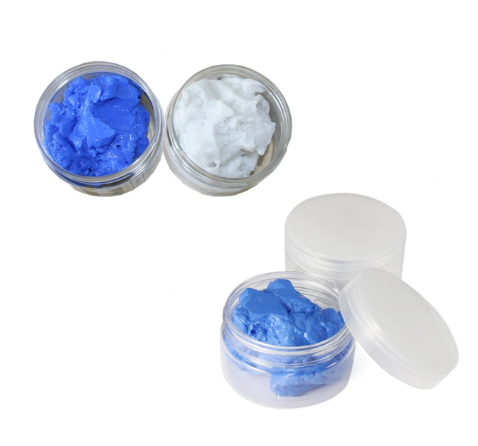
Selecting the correct polymer base dictates the success of your tactile project. You must understand how different formulations affect the final product's flexibility, durability, and safety profile.
The Shore hardness scale is the industrial standard for measuring material resistance. Standard mold-making silicones often fall in the Shore A range. A Shore 30A rating provides firm resistance, suitable for robust functional parts. However, creating a soft, compressible toy requires dipping into the Shore 00 scale. The Shore 00 series offers maximum compliance, mimicking the popular "Taba-style" squish.
Shore Scale Range | Tactile Resistance | Common Applications |
|---|---|---|
Shore 30A - 50A | Firm, springy, high resistance | Standard molds, robust gaskets |
Shore 10A - 20A | Medium soft, moderate give | Prop making, flexible tooling |
Shore 00-30 - 00-50 | Extremely soft, fleshy feel | Sensory toys, medical simulators |
Industry experts strongly favor platinum-cure systems over tin-cure alternatives. Platinum-cure, or addition-cure, provides superior dimensional stability. It exhibits virtually zero shrinkage over time. Tin-cure formulations often shrink and degrade, ruining the intricate details of a meticulously sculpted mold. By choosing a platinum system, you ensure the longevity of your cast.
Safety grades matter immensely. If the end product will be handled frequently, you need reliable squishy silicone rubber that meets stringent safety standards. Items carrying a risk of mouth contact require "food-grade" or "prosthetic-grade" certifications. These grades ensure the cured material remains biologically inert and safe for prolonged skin contact.
Brand reliability directly impacts batch consistency. Sourcing from established polymer manufacturers, such as Smooth-On or Polytek, guarantees reliable curing. These companies provide detailed technical data sheets (TDS). A proper TDS outlines exact pot life, demold times, and viscosity ratings, removing guesswork from your production process.
Working with raw polymers exposes you to specific chemical risks before the cross-linking process completes. You must implement robust safety measures to protect your respiratory and dermal health.
Respiratory protection is non-negotiable during the mixing phase. Liquid components can release volatile compounds. You should wear a NIOSH-approved half-face respirator equipped with organic vapor filters. Standard cloth masks offer zero protection against chemical vapors. Proper filtration ensures you do not inhale harmful off-gassing during the active chemical reaction.
Dermal protection requires careful glove selection. You must wear high-quality nitrile gloves. Standard latex gloves contain sulfur compounds introduced during their manufacturing process. Sulfur acts as a severe poison to platinum catalysts. If you touch your unmixed components or your mold with latex gloves, you will cause cure inhibition. The material will remain a sticky, uncured mess indefinitely.
Your workspace environment directly influences the chemical cross-linking process. You must establish strict baselines for temperature and humidity to ensure consistent curing.
Ventilation: Maintain active cross-ventilation using exhaust fans to direct fumes away from your breathing zone.
Temperature Control: Keep ambient room temperature near 73°F (23°C). Higher temperatures drastically accelerate curing, while lower temperatures retard it.
Humidity Management: Work in a dry environment. High ambient humidity can introduce moisture into the mixture, causing internal bubbling or improper setting.
Surface Protection: Cover workbenches with disposable parchment paper or silicone mats to catch accidental spills.
Precision during the preparation phase dictates the structural integrity of your cast. You must follow a strict standard operating procedure to avoid sticky spots or weak bonds.
Ratio Calibration: Read your technical data sheet carefully. Most sensory silicones use a convenient 1:1 mix ratio by volume or weight. Weighing components on a digital gram scale provides the highest accuracy.
Component Dispensing: Pour Part A into a clean, smooth-walled mixing container. Dispense Part B into a separate container first to verify the weight, then combine them.
Mixing Mechanics: Stir the mixture using a steady, figure-eight motion. Scrape the sides and bottom of the container frequently. Continue this for 1 to 2 minutes.
Air Avoidance: Deliberately avoid aggressive whipping motions. Whipping folds unnecessary air into the matrix, creating micro-bubbles that ruin the final texture.
Transferring the mixture into your mold requires patience and strategic physics. You must prepare the mold correctly to ensure a clean release.
First, apply a micro-layer of petroleum jelly or a dedicated mold release spray. Brush it out thinly so it does not pool in the intricate crevices of your mold. Pooling causes surface defects on the finished item.
Use the "high pour" technique to mitigate air entrapment. Hold your mixing cup high above the mold. Pour the mixture in a thin, continuous stream targeting the lowest point of the mold cavity. This thin stream stretches the polymer, forcing trapped air bubbles to burst before they even reach the mold.
If you lack an expensive vacuum chamber, you can use accessible degassing methods. The "fridge hack" is highly effective for low-viscosity mixes. Place the poured mold in a refrigerator for 45 to 60 minutes. The cold temperature significantly slows the chemical reaction. This extended pot life gives trapped air enough time to rise to the surface and escape naturally.
The curing process follows a predictable timeline based on ambient temperature. You can break this timeline down into three distinct phases.
The first phase is the pot life. The mixture begins thickening but remains highly liquid and pourable. You must complete all mixing, pouring, and degassing within this window.
The second phase is the gel stage. The material transitions into an intermediate, gelatinous state. It sets firmly enough to hold its shape but lacks mechanical strength. Do not disturb or poke the mold during this vulnerable period.
The final phase dictates the demold time. At standard room temperature, most tactile polymers require 2 to 4 hours to solidify enough for safe removal. Carefully peel the mold back, avoiding sharp pulling motions. While you can handle the item now, it typically takes a full 24 hours to achieve maximum mechanical strength.
Once you master the basic procedure, you can start altering the tactile feedback of your creations. Customizing the matrix allows you to target specific sensory profiles.
You can adjust the resistance by adding specialized silicone plasticizers, commonly known as "slackers" or "deadeners." Adding these components to your Squishy Silicone matrix reduces the natural snap-back of the rubber. This technique yields extreme elasticity, perfectly mimicking the slow-rebound, ASMR-friendly "Taba Squishy" textures currently dominating sensory markets.
Some creators modify the matrix using inert oils. Mixing baby oil with pure silicone sealant creates a highly flexible, budget-friendly compound. However, excessive oil addition causes the material to "sweat" or leach fluid over time, degrading the product's lifespan.
Chemistry-based alternatives exist for educational or cost-saving purposes. You can explore non-silicone prototyping methods. Alginate mixed with calcium chloride creates a fascinating membrane reaction, forming liquid-filled sensory toys. Melted gel waxes offer another route for soft textures. We must note, however, that these alternatives lack the structural durability and tear resistance of pure two-part polymers.
Advanced creators eventually progress past commercial molds. You can sculpt bespoke masters using sulfur-free clay. Sulfur-free clay ensures no cure inhibition occurs when you pour your mold-making material over the master. This progression allows you to cast highly proprietary designs and unique IP shapes.
Creating your own tactile items is rewarding, but it requires a realistic assessment of initial capital and ongoing labor. You must evaluate whether in-house production makes sense for your specific goals.
The upfront financial requirement includes raw materials like Parts A and B, specialized pigments, and mold release. You must also purchase respiratory gear, digital scales, and mixing supplies. Furthermore, you must account for the cost of potential failure batches. Mistakes in mix ratios or unexpected cure inhibition will consume expensive materials rapidly.
You also face a significant time and labor investment. Mastering mix ratios, learning efficient mold making, and controlling ambient temperatures involves a steep learning curve. The setup, active mixing, pouring, and extensive cleanup easily consume several hours per batch.
To simplify this choice, we recommend using a decision matrix. This framework helps clarify when you should prototype in-house versus when you should procure pre-manufactured sensory items.
Evaluation Criteria | In-House Prototyping (Build) | Pre-Manufactured (Buy) |
|---|---|---|
Customization Level | Unlimited (Hyper-custom shapes, specific softness) | Limited to catalog options |
Labor Investment | High (SOP adherence, messy cleanup) | Zero (Immediate sensory relief) |
Safety & Compliance | Requires strict user monitoring & PPE | Guaranteed pre-certified safety compliance |
IP Ownership | Full ownership of proprietary designs | None (Purchasing generic market items) |
If you require immediate sensory relief without the mess, purchasing high-end products is highly efficient. Conversely, if IP ownership and hyper-customization are paramount to your business strategy, investing in the custom fabrication learning curve yields a strong ROI.
Embrace Exact Science: Successful fabrication bridges accurate chemical selection with strict procedural adherence. Measure by weight, not just volume, for ultimate consistency.
Prioritize Safety: Never compromise on respiratory and dermal protection. Ensure your workspace is well-ventilated and free of sulfur-containing latex.
Utilize Smart Hacks: Leverage the "high pour" and "fridge cooling" techniques to achieve bubble-free casts without investing in heavy machinery.
Scale Gradually: We encourage you to start with small-batch testing using reputable 1:1 platinum-cure kits before scaling up to complex, multi-part molds.
If you are evaluating immediate solutions, we highly recommend browsing pre-certified, rigorously tested squishy products. Purchasing ready-made items serves as a highly reliable, mess-free alternative to formulating batches from scratch.
A: The liquid, uncured state poses respiratory and dermal risks, requiring proper PPE like respirators and nitrile gloves. However, once a high-grade platinum silicone fully cures, it becomes a chemically inert, non-toxic material safe for handling.
A: Surface tackiness typically results from incorrect mixing ratios or inadequate stirring. It also frequently occurs due to cure inhibition, often caused by exposing the mixture to sulfur compounds found in standard latex gloves or certain sculpting clays.
A: No. While a vacuum chamber guarantees a perfectly void-free cast, you can achieve highly acceptable results for tactile toys without one. Using high-quality, low-viscosity materials combined with the "high pour" and "fridge cooling" tricks effectively mitigates trapped air.
A: You cannot soften material that has already cured. To make future batches softer, you must add specialized silicone deadeners or slackers to the liquid mixture before curing. Avoid altering commercial A/B ratios, as this compromises structural integrity.


