Views: 152 Author: Site Editor Publish Time: 2026-06-15 Origin: Site


Many buyers view Silicone Oil as a simple, commoditized fluid. However, the exact manufacturing process directly dictates its thermal stability. It also controls purity and compliance in critical applications. You should not view the chemical transition from raw silica to complex polymers as a mere academic exercise. Instead, this transition represents a crucial variable in your supply chain reliability. Understanding how manufacturers synthesize these fluids empowers you. It enables procurement and engineering teams to confidently evaluate suppliers. You can clearly differentiate between standard industrial fluids and highly refined grades. Ultimately, aligning your technical specifications with production methods improves your Total Cost of Ownership (TCO). You can actively prevent unexpected machinery wear and regulatory failures. Let us explore the foundational steps behind manufacturing these vital fluids.
Manufacturing Dictates Consistency: The transition from raw silica to specialized fluids relies on Ring-Opening Polymerization (ROP) to ensure batch-to-batch viscosity precision.
Purity Drives Compliance: Achieving FDA Silicone Oil standards requires rigorous secondary processes, such as vacuum distillation, to strip volatile organic compounds (VOCs) and cyclic siloxanes (D4/D5).
Application-Specific Evaluation: Assessing a supplier’s formulation capabilities—such as chain termination and catalyst neutralization—is critical to preventing fluid degradation and unexpected machinery wear.
TCO Implications: Cheaper, poorly refined silicone oils can introduce residual catalysts or unreacted byproducts, leading to rapid emulsification, seal degradation, or compliance failures.
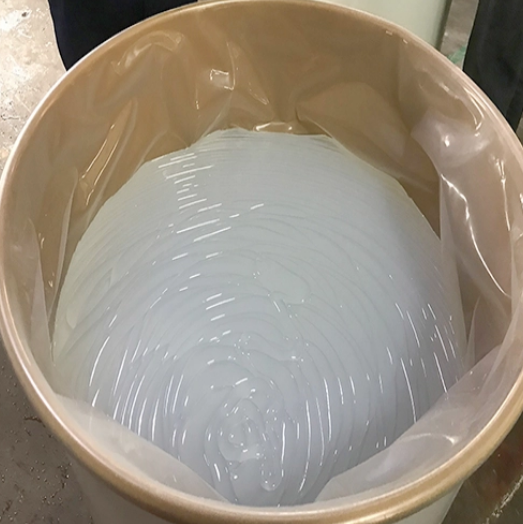
Standard organic fluids rely on a carbon-to-carbon backbone. These carbon bonds easily break down under extreme heat. Silicone fluids operate differently. They rely on a strong silicon-oxygen (Si-O-Si) backbone. This structure creates a unique semi-inorganic advantage. The fluid resists thermal degradation naturally. It also offers excellent oxidative stability. You can push these fluids to higher temperatures without experiencing rapid breakdown.
Manufacturers customize these fluids by attaching different side groups to the backbone. Adding methyl groups creates standard Polydimethylsiloxane (PDMS). This formulation handles everyday industrial lubrication. Attaching phenyl groups changes the physical properties entirely. Phenyl-based fluids withstand extreme high-temperature environments. Changing these functional groups allows engineers to tailor the fluid for specific operational demands.
This molecular structure directly influences your business outcomes. The primary benefit is a flatter viscosity-temperature curve. The fluid maintains consistent performance across fluctuating operational environments. Your machinery will not suffer from fluid thinning in the summer. It will not freeze up during winter operations. This consistency guarantees less downtime and lowers your maintenance costs.
Property | Carbon-Based (Mineral) Fluids | Silicone-Based Fluids |
|---|---|---|
Backbone Structure | C-C (Carbon-Carbon) | Si-O-Si (Silicon-Oxygen) |
Thermal Stability | Moderate (Breaks down >150°C) | Excellent (Stable >200°C) |
Viscosity-Temperature Curve | Steep (Thins rapidly when hot) | Flat (Remains stable) |
The manufacturing journey involves several precise chemical phases. Each step requires strict control to ensure the final fluid performs reliably.
The process begins in extreme heat. Manufacturers extract silicon metal from raw quartz or sand at temperatures near 2000°C. They then react this silicon metal with methyl chloride. This reaction occurs over a copper catalyst at 260-320°C. We call this the Rochow Process. The direct outcome is the production of dimethyldichlorosilane. This chemical serves as the critical building block for all subsequent steps.
Next, engineers react these chlorosilanes with water or methanol. This action strips away chlorine and forms intermediate siloxane chains. A major quality checkpoint occurs here. The reaction generates hydrogen chloride (HCl) gas as a byproduct. Managing this gas efficiently reflects a manufacturer's commitment to sustainable production. Responsible facilities recover and recycle this HCl.
This phase is critical for buyers. Manufacturers use alkaline catalysts, such as potassium hydroxide (KOH), to polymerize cyclic siloxanes. The process opens the small molecular rings and links them into long, linear chains. ROP allows chemists to control the exact chain length. This precise control dictates the final viscosity. The outcome can range from ultra-light, watery fluids to highly viscous gums.
The final synthesis step involves capping the polymer ends. Manufacturers typically use hexamethyldisiloxane to terminate the chain. Once capped, they must neutralize the alkaline catalyst. Proper termination prevents the oil from continuing to react. If a manufacturer skips this step, the fluid will degrade rapidly when deployed in high-heat industrial applications.
Phase | Primary Action | Quality Outcome |
|---|---|---|
1. Monomer Synthesis | React silicon with methyl chloride | Creates pure dimethyldichlorosilane |
2. Hydrolysis | Introduce water/methanol | Forms base siloxane chains |
3. Polymerization | Apply alkaline catalyst (ROP) | Determines precise final viscosity |
4. Termination | Cap chain ends and neutralize | Ensures long-term fluid stability |
Baseline manufacturing always leaves behind unreacted byproducts. These include volatile cyclic siloxanes known as D4 and D5. Baseline fluids also contain low-molecular-weight contaminants. These volatile organic compounds (VOCs) pose significant risks in sensitive environments. They can outgas, degrade plastics, or cause biological irritation.
Creating highly refined grades requires stringent secondary processing. Facilities utilize intense vacuum distillation and precision filtration. These steps physically strip away the volatile components. The goal is to bring total VOC levels below strict industry thresholds. High-quality manufacturers routinely achieve VOC levels below 0.5%.
You must map this refinement process to your specific compliance standards. Medical, food-grade, and cosmetic applications demand absolute safety. They require specific, highly distilled grades to ensure biocompatibility. Producing an FDA Silicone Oil means adhering to these rigorous distillation standards. It ensures compliance with global directives like REACH and RoHS.
Buyers often question the premium price of highly refined fluids. You should frame this cost as a necessary risk mitigation strategy. Premium grades prevent devastating product recalls. They ensure audit readiness. Investing in pure fluids upfront protects your brand reputation entirely.
Best Practices for Purity: Always demand process documentation. Verify the vacuum distillation parameters your supplier uses. Do not rely solely on basic safety data sheets.
Many buyers hold misconceptions about fluid viscosity. For example, some believe higher viscosity universally prevents fluid emulsification. Clinical and operational realities tell a different story. Studies show little difference in emulsification rates between 1000 cSt and 5000 cSt fluids in high-shear biological environments. Surface tension and chemical impurities play a much larger role. You must prioritize fluid purity over arbitrary viscosity targets.
Procurement teams must carefully review the Certificate of Analysis (CoA). You should actively look for specific red flags.
Broad Molecular Weight Distribution: This indicates poor polymerization control.
High VOC Limits: Acceptable limits should remain clearly documented below 0.5%.
Residual Catalysts: The CoA must confirm the absence of residual copper or alkaline catalysts.
Acidity Levels: High acidity suggests poor catalyst neutralization during Phase 4.
You must contrast the upfront cost of premium manufacturing against hidden operational expenses. Cheap oils often introduce unreacted byproducts into your systems. This leads to frequent fluid replacement. You will experience mechanical downtime due to premature thermal degradation. Failed quality audits will cost you significantly more than the initial premium for tightly controlled fluids.
A common operational error involves substituting pure industrial fluids with commercial aerosol sprays. Commercial aerosols are not pure polydimethylsiloxane. They often contain highly volatile carrier solvents. For instance, manufacturers frequently use 3-methylpentane as a propellant. This non-polar solvent evaporates quickly but can severely degrade sensitive plastics before it dissipates. You should only use pure, solvent-free fluids for critical machinery components.
Industrial settings require expert diagnostic frameworks to track fluid health. Regular oil analysis helps you spot machinery issues early. However, you must interpret the data correctly.
Identifying Dirt Ingress: Look at the silicon and aluminum levels. If the Silicon-to-Aluminum ratio sits around 3.4:1, you have dirt ingress. Silica dust has entered your system.
Identifying Additives: If silicon appears entirely alone at low levels (1-10 ppm), do not panic. This usually represents the silicone-based anti-foaming additive. It could also indicate a leaching silicone seal. It does not mean your machinery is failing.
You should adopt a strict shortlisting logic before committing to bulk agreements. Advise your purchasing team to request detailed process documentation. This documentation must detail the supplier's distillation rigor. Ask about their catalyst neutralization methods. Investigate their environmental handling of HCl byproducts. A transparent supplier will gladly share these specific engineering controls.
Common Mistakes: Do not approve a supplier based on a single small-batch sample. Always request consistency data across multiple production runs to ensure their ROP process is truly stable.
The intrinsic value of these fluids lies fundamentally in the precision of their synthesis. Every step matters. From the initial silica reduction to Ring-Opening Polymerization, rigorous control dictates performance. Vacuum extraction and precise chain termination determine whether a fluid will survive harsh industrial environments. You cannot afford to treat these chemicals as simple commodities.
Take actionable steps today to protect your operations. First, audit your current fluid specifications. Next, compare your true operational demands against your supplier's documented manufacturing capabilities. Finally, request grade-specific samples for internal testing. This is particularly vital if you are seeking FDA compliance. By actively managing these procurement variables, you secure a more reliable and cost-effective supply chain.
A: The primary raw material is silica, commonly found in sand or quartz. Manufacturers heat this silica to around 2000°C to extract pure silicon metal. They then react this metal with methyl chloride to begin the chemical synthesis.
A: The main difference lies in rigorous secondary refinement. FDA grades undergo intense vacuum distillation. This process strips away volatile cyclic siloxanes (D4 and D5) and low-molecular-weight byproducts. The fluid also passes strict biological safety and biocompatibility testing.
A: The entire manufacturing cycle typically takes several days. It involves a continuous multi-day flow of chemical synthesis, hydrolysis, polymerization, and complex condensation. Secondary refinement and vacuum distillation add further processing time.
A: Commercial sprays are not purely liquid silicone. They contain non-polar propellants and highly volatile carrier solvents like 3-methylpentane. These solvents evaporate rapidly into the air. Pure industrial linear polydimethylsiloxane lacks these solvents and remains stable.


