Views: 164 Author: Site Editor Publish Time: 2026-05-21 Origin: Site


Yes, two-part moldable silicone putty does harden into a solid form. However, it never becomes rock-hard. Instead, it cures into a durable, flexible rubber. Many people confuse professional two-part products with single-part toy putties. Those toy versions never dry out or cure. This renders them useless for structural adhesion or mold making. Professional grade putties, however, are specifically designed for demanding DIY and industrial applications.
We want to help you evaluate if moldable silicone putty is the right material for your specific project. By understanding its cured state, you can avoid costly project failures. You will learn the exact curing timelines, material limitations, and the critical risks of cure inhibition. This guide clarifies exactly what to expect when working with these versatile materials.
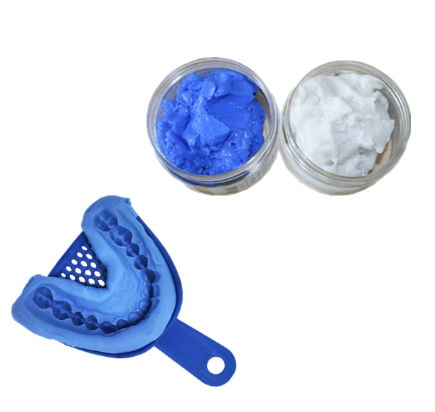
Curing vs. Drying: Moldable silicone putty doesn't "dry" via evaporation; it undergoes a chemical crosslinking process when two parts (A and B) are mixed.
Final Texture: Once fully cured, it retains flexibility (typically around a Shore Hardness of 35A) rather than becoming a rigid, brittle solid.
Cure Inhibition Risks: The curing process is easily destroyed by sulfur (commonly found in latex gloves) or inadequate mixing, resulting in a permanent sticky mess.
Material Alternatives: If a rock-hard, unyielding finish is required, epoxy putty is the correct structural alternative.
Understanding how materials transition from soft dough to solid rubber requires a look at basic chemistry. The term "harden" often misleads beginners. People expect a brick-like texture. You will actually get a resilient elastomer.
Two-part platinum Silicone putty does not rely on air exposure. It also does not rely on moisture evaporation. You must mix a 1:1 ratio by weight. This triggers a specific chemical reaction. The base and the catalyst interact to form a three-dimensional polymer network. We call this chemical crosslinking. Because it relies entirely on a chemical reaction, it can cure in enclosed spaces. It will even cure underwater.
Many users associate the word "putty" with popular childhood toys. Single-part toy putties use a blend of silicone oil and boric acid. Manufacturers design them specifically never to harden. They never dry out. You can stretch them and bounce them for decades. Because they never achieve a stable solid state, they are completely useless for structural adhesion. You cannot use them for mold making.
Professional products have a defined end-state. Standard moldable silicone putty cures to a flexible, rubber-like state. You will usually see a rating around 35A Shore Hardness. What does 35A feel like? It resembles the firmness of a rubber shoe sole or a dense pencil eraser. It bends and flexes without snapping. This flexibility makes it ideal for demolding complex small parts. It also acts as an excellent shock absorber for absorbing vibration.
Choosing the right material dictates the success of your project. Users often hesitate between silicone and epoxy options. They look similar in their raw dough states. Their final cured states, however, are entirely opposite.
You should choose silicone if your project requires flexibility. It serves distinct use cases where rigid materials fail.
Success criteria: You need a reusable mold, a removable gap filler, or a flexible bumper.
Pros: It does not stick to most surfaces permanently. Silicone generally only adheres to other silicone. You can peel it away easily. It captures microscopic surface details perfectly.
Products like plumber's putty or fix-it sticks serve a completely different purpose. They act as structural adhesives.
Success criteria: You need a structural, load-bearing repair. You plan to sand, drill, or paint the final piece.
Pros: It cures completely rock-hard. It forms a permanent, unyielding bond to plastics, metals, and ceramics.
Feature | Silicone Putty | Epoxy Putty |
|---|---|---|
Final Texture | Flexible, rubber-like (35A) | Rock-hard, rigid solid |
Adhesion | Non-permanent, peels away | Permanent structural bond |
Post-Processing | Cannot be sanded or painted | Can be sanded, drilled, and painted |
Best Application | Mold making, vibration dampening | Pipe repair, broken part rebuilding |
We must acknowledge a popular budget-friendly hack. Many makers mix standard hardware store silicone sealant with cornstarch or soapy water. They knead it to create a makeshift moldable putty.
This method has severe limitations. It relies entirely on moisture to cure. The cornstarch introduces unpredictable shrinkage. You will lose the precise dimensional stability found in commercial two-part putties. We only recommend this hack for rough, disposable projects.
Time management is critical when working with reactive polymers. The curing process is not instantaneous. It progresses through three distinct, measurable stages.
Working/Open Time: This represents your active window to mix and shape the material. The timer starts the second part A touches part B. It ranges from 2 minutes for quick-cast putties to 15 minutes for standard variations.
Surface Dry (Tack-Free): The putty reaches a point where it is no longer sticky to the touch. You cannot reshape it anymore. Expect 15 to 45 minutes for quick varieties. Standard versions take 1 to 3 hours.
Full Cure: The material reaches its maximum mechanical strength. It achieves its final Shore Hardness rating. This usually requires 24 to 72 hours. Thicker applications take longer to fully cure inside.
Your workspace environment dictates the actual curing speed. Manufacturers calibrate their timelines based on specific conditions. Optimal curing happens around 20°C to 24°C (68°F to 75°F).
Warmer temperatures accelerate the chemical crosslinking. Colder environments slow it down. High ambient humidity can also disrupt surface curing on some sensitive formulations.
Many makers try to extend their working time by cooling the components. They put parts A and B in the refrigerator. This is a common mistake.
Cooling the components slightly delays the cure time. You might gain an extra 45 to 60 seconds. However, it makes the putty stiff. It becomes exceptionally difficult to knead properly. Poor kneading leads to failed molds. It is much better to simply purchase a product with a designated longer open time.
Nothing frustrates a maker more than uncured material. If your project remains a sticky mess after 24 hours, you encountered a chemical failure. Two primary culprits cause almost all curing failures.
Platinum-cure silicone reacts violently to sulfur. Even microscopic traces of sulfur will halt the chemical reaction. We call this cure inhibition.
Kneading the putty with standard latex gloves guarantees failure. Exposing it to certain raw woods, UV resins, or heavy cosmetics also destroys the catalyst. You must protect your materials.
Best Practice: Always use powder-free nitrile gloves. Ensure your master object is completely clean. Seal any porous or 3D-printed resin surfaces before applying the putty.
Failing to knead the 1:1 mixture perfectly is the number one cause of soft spots. You must achieve a single, uniform color. Zero streaks can remain.
We recommend a specific technique. Use a stretch-fold-and-press kneading method. Pinch the material, stretch it out, fold it over itself, and press it flat. Repeat this continuously for 3 to 5 minutes. Hand warmth helps blend the components smoothly.
We must state the reality clearly. Cure inhibition is irreversible. You cannot salvage a failed batch.
Uncured, sticky putty cannot be fixed with external heat. You cannot add more hardener to fix it. The chemical catalyst is permanently dead. You must scrap the ruined putty. Furthermore, you must thoroughly clean the master object with isopropyl alcohol before attempting a second try.
Knowing when to use a putty versus a pourable liquid saves time and money. Putties offer unique handling characteristics. They excel in specific physical orientations.
Vertical Surfaces: Liquid silicone drips and flows downward. Putty does not drip. It does not self-level. This makes it perfect for stamping architectural textures directly onto vertical walls. You can also repair vertical dashboard gaps in vehicles easily.
Quick Impression Molds: You can capture small, localized details effortlessly. Press the putty over a coin, a jewelry piece, or small wood trim. You do not need to build a complex, leak-proof mold box.
Sometimes, putty represents the wrong choice. In these scenarios, use liquid pourable silicone instead.
Large or Bulky Objects: Hand-pressing putty over large areas yields uneven thickness. Thin spots create weak points. These thin areas risk tearing during the demolding process.
Deep Cavities & Intricate Undercuts: Putty lacks flow. It cannot travel into deep, hidden crevices on its own. It will bridge over fine internal details rather than capturing them.
Porous Surfaces: Applying heavy putty to unsealed wood, cardboard, or rough fabric causes a massive problem. The material pushes into the pores. It causes permanent mechanical locking. You will ruin both the new mold and the original object.
Evaluating the right material defines your project's outcome. Moldable silicone putty hardens into a tough, flexible rubber. It does not become a brittle, rock-hard plastic. This unique flexibility makes it an excellent choice for rapid mold making. It also excels at non-permanent, vibration-resistant gap filling.
Before starting your next project, take a few immediate action steps. Verify the Shore Hardness on the product label. Check the stated working time to ensure it matches your skill speed. Finally, buy a box of nitrile gloves to guarantee a successful, sulfur-free cure. You are now fully prepared to handle these materials with professional confidence.
A: Yes, mildly elevating the room temperature accelerates the chemical crosslinking. However, it drastically reduces your working time. Do not use extreme heat like a direct heat gun. Excessive localized heat can permanently degrade the material.
A: Generally, no. Cured silicone naturally resists sticking to most materials. However, if molding against glass, highly polished surfaces, or other silicone, a standard mold release provides cheap insurance. Even a very light mist of cooking spray prevents accidental sticking.
A: This is usually a sign of mild cure inhibition. It often comes from surface contaminants on the object you are molding. High-humidity environments can also disrupt surface crosslinking. Always ensure your master object is clean and entirely sulfur-free.


