Views: 147 Author: Site Editor Publish Time: 2026-06-19 Origin: Site


Under standard ambient and low-pressure conditions, commercial silicone fluids do not evaporate at an appreciable rate. Many operators assume these polymers remain entirely static inside dynamic machinery. Engineers frequently rely on this exact permanence for continuous high-temperature vacuum operations. While this extreme low volatility reduces lubrication intervals and fluid loss, it introduces severe cross-contamination risks in sensitive manufacturing environments. Fugitive molecules can easily ruin entire coating or bonding production runs if left unmanaged. The purpose of this article is to equip engineering and procurement teams with the chemical realities, edge-case risks, and evaluation frameworks necessary for specifying the correct silicone fluid for high-stakes applications. You will learn how molecular weight dictates vapor pressure. We will also explore strict mitigation strategies to prevent microscopic surface contamination across your facility.
Baseline Stability: Mid-to-high viscosity silicone fluids (e.g., >100 cSt) possess exceptionally low vapor pressure, exhibiting near-zero volume loss even in vacuum environments.
The Nanoparticle Exception: In specific suspensions (like electrorheological fluids), the "Kelvin effect" can multiply vapor pressure, causing unexpected and rapid evaporation.
The Contamination Trade-off: Low volatility combined with low surface tension means fugitive silicone molecules "crawl" rather than evaporate, causing catastrophic adhesion failures in paint and aerospace applications.
Strategic Specification: Upgrading to phenyl-modified formulations prevents high-heat degradation, while specifying FDA Silicone Oil mitigates compliance risks in food and medical manufacturing.
The high bond energy of the siloxane (Si-O) backbone inherently resists phase changes compared to carbon-based mineral oils. You cannot easily break these strong molecular links. Mineral oils rely on much weaker carbon-carbon bonds. They readily vaporize under thermal stress. The strong Si-O framework acts as a thermal anchor. It keeps the fluid in a liquid state across extreme temperature ranges. This fundamental chemical structure defines almost every industrial application for the fluid. It simply refuses to transition into a gaseous state under standard atmospheric conditions.
Evaporation rates are inversely correlated with viscosity. Low-viscosity fluids contain shorter polymer chains. They have a slightly higher tendency to evaporate. Once molecular weight yields a viscosity above 100 cSt, physical properties change dramatically. The thermal expansion coefficient stabilizes completely. Vapor pressure drops to negligible levels. Engineers consider 100 cSt the crucial threshold. Beyond this point, you can effectively treat the fluid as non-volatile. The cohesive forces between long polymer chains overpower any ambient thermal energy.
Industrial testing demonstrates incredible stability under extreme pressure drops. Laboratory technicians placed 200 cSt Silicone Oil in a -2 bar vacuum chamber overnight. It showed zero visible volume loss. This result validates its widespread use in high-vacuum diffusion pumps. These pumps routinely achieve operating pressures as low as 10^-8 Pa. Traditional hydrocarbon oils boil away instantly under such conditions. The silicone polymer maintains its liquid integrity. It continues to seal and lubricate without outgassing.
Comparison of Vapor Pressure Metrics
Fluid Type | Viscosity at 25°C | Vapor Pressure (Room Temp) | Vacuum Suitability |
|---|---|---|---|
Standard Mineral Oil | Various | High (Volatile) | Poor (Rapid outgassing) |
Low-Viscosity Silicone | 10 cSt | Low-Moderate | Fair |
Mid-Viscosity Silicone | 100 cSt | Extremely Low | Excellent |
High-Viscosity Silicone | 1000+ cSt | Near Zero | Ultra-High Vacuum Ready |
You might encounter rare edge cases where true evaporation actually occurs. When manufacturers mix silicone fluid with nanoparticles, physical dynamics change. We see this often in giant electrorheological fluids. The curvature of the liquid-vapor interface alters sharply around tiny particles. This physical shift triggers the "Kelvin effect." It multiplies the saturation vapor pressure dramatically. It causes otherwise stable oil to evaporate completely within hundreds of hours at 80°C. Researchers must account for this phenomenon. Otherwise, their fluid suspensions will inexplicably dry out.
Operators frequently confuse true evaporation with thermal degradation. Continuous high heat and moisture exposure damages the polymer. It leads to polymer chain scission and severe hydrolysis. The molecular structure literally breaks apart. The fluid begins outgassing volatile silanols (Si-OH). It ultimately leaves behind silica-like residues on machine parts. The fluid did not simply evaporate. It underwent a destructive chemical breakdown. This degradation severely impacts electrical insulation properties.
Certain specialized low-hydrogen silicone oils exhibit higher volatility at elevated curing temperatures. Manufacturers often use these variants in cross-linking applications. They require specific formulation adjustments to remain stable. Engineers often add high-boiling-point solvent barriers. These barriers suppress premature vaporization during high-temperature processing. Without these additives, the low-hydrogen components flash off too quickly. This leaves the final cured product brittle and structurally compromised.
Best Practices for Thermal Management
Monitor operational temperatures continuously using infrared thermography.
Keep bulk fluid temperatures below 150°C in open-air systems.
Implement nitrogen blanketing in closed systems to prevent oxidation.
Conduct regular dielectric loss testing to catch early moisture ingress.
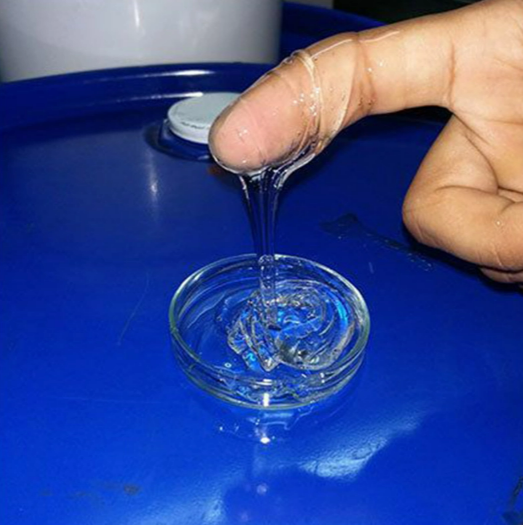
Low volatility has a distinctly dark side. Silicone fluid features an extreme low surface tension. A typical 0.65 cSt fluid sits around 15.9 mN/m. It spreads aggressively over almost all metals and plastics. Because it does not evaporate naturally, it persists indefinitely on these surfaces. Chemists call this the "crawling" phenomenon. The molecules creep outward continuously. They form microscopic, invisible layers across massive surface areas. You cannot rely on time or airflow to clear the contamination.
Trace amounts transfer easily via facility HVAC systems. Simple human contact spreads the fluid across entire factories. These fugitive molecules cause millions of dollars in unexpected downtime. Automotive paint lines frequently suffer from "fish-eye" defects. The paint simply refuses to adhere to the invisible silicone layer. Aerospace composites experience critical bonding failures for the exact same reason. A single drop of fluid on a worker's boot can contaminate an entire cleanroom. The permanence of the fluid becomes your greatest operational liability.
Establishing strict "silicone-free" zones is absolutely mandatory for coating and bonding facilities. You must isolate all lubrication activities. Remediation requires aggressive, multi-stage cleaning protocols. Standard soap or mild degreasers fail completely. They merely smear the fluid over a wider area.
Standardized Remediation Protocol
Apply specialized siloxane-dissolving solvents or aromatic hydrocarbons (like toluene or xylene).
Use a dual-solvent approach (isopropanol followed by acetone) for sensitive electronics.
Perform rigorous mechanical wiping using lint-free, single-use abrasive cloths.
Conduct surface energy testing (using test inks) to verify complete residue removal.
Default to higher molecular weights for open-system, high-temperature lubrication. This ensures maximum molecular cohesion. Higher viscosity grades resist crawling slightly better than thinner grades. They also maintain thicker hydrodynamic films under heavy loads. You should specify custom molecular weights based on exact operating temperatures. A well-specified fluid reduces long-term replenishment costs significantly.
Standard polydimethylsiloxane (PDMS) works well for basic needs. For demanding insulation systems like transformers or potting, you must upgrade. Evaluate phenyl-modified PDMS variants. They resist severe thermal oxidation far better than standard grades. You can also integrate specialized nano-fillers. These fillers stabilize the fluid against damaging moisture ingress. They maintain the dielectric integrity of the fluid during extreme humidity swings.
Applications intersecting with human contact require strict regulatory oversight. Generic industrial grades introduce unacceptable heavy metal and impurity risks. You cannot use them in packaging or medical devices. Specifying certified FDA Silicone Oil ensures absolute chemical inertness. It guarantees non-toxicity and provides audit-ready compliance documentation. Medical tubing extrusion and food-grade conveyor lubrication demand this exact rigorous purity. It protects end-users and shields your company from immense legal liability.
Sometimes thermal exposure is simply too high for pure fluid. It will inevitably undergo chain scission and degrade. In these scenarios, you should evaluate oil-in-water (O/W) emulsions. The surrounding water phase provides a crucial thermal buffer. The water evaporates slowly, absorbing immense heat energy. This protects the silicone droplets from premature degradation. Emulsions offer an excellent solution for textile finishing and high-heat mold release applications.
Grade Selection Chart
Application Environment | Primary Threat | Recommended Solution |
|---|---|---|
High Vacuum Pumps | Outgassing / Volume Loss | >100 cSt Standard PDMS |
Electrical Transformers | Moisture / Thermal Oxidation | Phenyl-modified PDMS + Nano-fillers |
Food Packaging & Medical | Toxicity / Impurities | Certified FDA Grade Silicone |
Textile Finishing / Mold Release | Flash Heat / Fire Risk | Oil-in-Water (O/W) Emulsion |
The initial premium for high-grade silicone fluid often causes sticker shock. However, operators easily offset this cost over the fluid's lifespan. It drastically reduces maintenance cycles. It extends expensive mold life. It also helps you avoid catastrophic equipment dielectric failure. Cheaper hydrocarbon alternatives require constant top-offs and frequent total system flushes. When you factor in labor and machine downtime, premium siloxanes provide a vastly superior return on investment.
You must scrutinize your suppliers aggressively. Reject any vendor lacking batch-specific vapor pressure curves. You should also demand detailed dielectric loss factor (tan δ) data. Legitimate manufacturers provide exhaustive Technical Data Sheets (TDS) and Certificates of Analysis (CoA) for every single batch. If a supplier hesitates to provide molecular weight distributions or thermal stability charts, disqualify them immediately. Counterfeit materials dominate the lower end of the global supply chain.
You can verify raw materials quickly on the factory floor. These field authentication methods help you avoid dangerous counterfeits before they enter your equipment.
Visual/Olfactory: Genuine fluid is completely odorless and crystal clear. Fakes often exhibit a slight turbidity and emit pungent, solvent-like odors.
Burn Test: Real silicone is notoriously difficult to ignite. It burns slowly without thick black smoke. Mineral oil substitutes ignite easily and produce heavy, dark soot.
Freeze Test: High-quality silicone maintains flowability even at -50°C. Adulterated batches will freeze solid or turn highly cloudy under extreme cold.
Silicone oil does not meaningfully evaporate under standard industrial parameters. This extreme stability makes it an unparalleled asset for long-term lubrication and demanding vacuum sealing. However, its absolute permanence is also its greatest liability. You must enforce strict facility hygiene to prevent microscopic cross-contamination. Moving forward, engineering teams should audit their specific operational temperatures. You must map all potential contamination vectors across your factory floor. Finally, demand rigorous molecular-weight data and verified FDA compliance documentation before finalizing any vendor selection.
A: Yes. Mid-to-high viscosity silicone fluids have vapor pressures low enough to achieve ultra-high vacuums without outgassing, outperforming hydrocarbon oils.
A: Standard degreasers are ineffective. It requires specialized siloxane-dissolving solvents, aromatic hydrocarbons (like xylene), or a dual-solvent approach (isopropanol + acetone) alongside mechanical abrasion.
A: Yes. While it doesn't evaporate, it is highly hygroscopic. Absorbing just 100 ppm of moisture severely degrades its electrical insulation properties, forming a destructive heat-moisture cycle in closed systems.


