Views: 135 Author: Site Editor Publish Time: 2026-06-22 Origin: Site


Engineers and procurement teams face constant pressure to optimize equipment maintenance. They frequently ask if Silicone Oil dries out over time. This question heavily impacts component lifespan and total cost of ownership (TCO) across entire production facilities. Chemically, this fluid does not evaporate or dry out at room temperature. However, real-world applications often tell a much different story.
In practical environments, the fluid can migrate, wear off, or become contaminated. These physical changes closely mimic the visual effect of drying. They often lead to costly misdiagnoses on the factory floor. To prevent equipment failure, you must differentiate between true evaporation, mechanical displacement, and material degradation. We will explore how these synthetic fluids actually behave under stress. You will learn to specify the right lubricant grade to ensure long-term stability in high-stakes manufacturing environments.
Silicone oil boasts near-zero volatility at room temperature due to its stable silicon-oxygen (Si-O) bonds; it does not evaporate like water or solvent-based fluids.
When silicone lubrication seems to "disappear," it is usually due to mechanical migration or physical wipe-off, not drying.
Selecting the right viscosity and grade—such as FDA Silicone Oil for regulated environments—dictates long-term stability and minimizes contamination risks.
Silicone *oil* remains liquid indefinitely, whereas silicone *sealants* or *adhesives* are engineered to cure and harden.
You must understand the underlying chemistry to evaluate fluid lifespan. The science of stability starts at the molecular level. Siloxane polymers rely on exceptionally strong silicon-oxygen (Si-O) bonds. This unique structure grants extreme thermal stability and intense chemical inertness. Unlike carbon-based bonds found in standard lubricants, Si-O bonds resist breaking apart. They remain entirely stable under normal atmospheric conditions. They do not react easily to oxygen or moderate heat.
Viscosity plays a major role in evaporation rates. Industrial buyers often select higher viscosity grades, such as 100cSt and above. These thicker fluids possess an evaporation rate approaching zero under normal environmental conditions. They simply lack the high vapor pressure required to turn from a liquid into a gas. The molecules stay tightly bound together. They remain liquid indefinitely when sitting on a shelf or resting inside a sealed gearbox.
Contrast this baseline longevity against traditional materials. Mineral oils and water-based alternatives behave very differently. Mineral oil oxidizes when exposed to air. It slowly breaks down and off-gasses. Water-based lubricants suffer an even worse fate. They are highly susceptible to rapid evaporation. They dry out entirely in low-humidity environments. They leave behind sticky residues or bare metal.
To evaluate these fluids effectively, you need clear criteria. You must match fluid volatility specifications to expected operating temperatures. This matching process ensures predictable fluid lifespans.
Lubricant Type | Room Temp Evaporation | Chemical Stability | Primary Vulnerability |
|---|---|---|---|
Pure Silicone Fluid | Near Zero | Extremely High (Si-O Bonds) | Migration / Surface Creep |
Mineral Oil | Moderate | Low to Moderate | Oxidation / Sludge Formation |
Water-Based Fluids | Very High | Low | Rapid Drying / Evaporation |
Maintenance technicians often complain about dry joints. They assume the applied fluid simply evaporated. This represents a massive misconception in mechanical maintenance. As established, the fluid does not dry. Instead, heavy loads physically squeeze it out of high-pressure contact points. This process is called mechanical displacement. It leaves the friction zone completely bare.
Beyond mechanical displacement, you must account for migration risks. Silicone fluids exhibit a strong tendency to "creep." They have exceptionally low surface tension. This physical trait allows them to spread rapidly across almost any surface. While great for uniform coverage, this creep causes the fluid to migrate away from the intended lubrication zone. It spreads onto adjacent components over time.
This migration poses severe implementation risks across manufacturing facilities. Contamination from migrating fluids causes disastrous consequences. Consider 3D printing farms. Even a microscopic layer of migrated fluid on a build plate ruins bed adhesion entirely. The plastic filament refuses to stick. In automotive paint facilities, the results are equally destructive. Airborne or migrated droplets land on car body panels before painting. They cause severe surface defects known as "fisheyes." These defects require expensive sanding and repainting.
You must establish strict material compatibility guidelines. Pure fluid excels at lubricating static seals, rubber O-rings, and plastic components. It conditions EPDM rubber beautifully. However, it proves generally unsuitable for heavy metal-on-metal friction. Metal gears and sliding tracks subject the fluid to extreme shear forces. It cannot sustain the necessary load-bearing film. It rapidly wears off, leaving the metal unprotected.
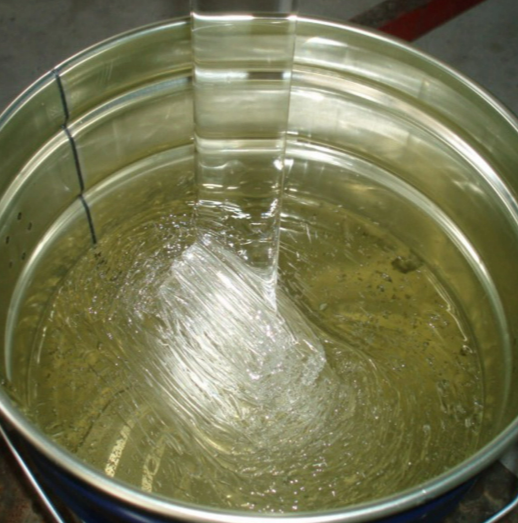
Room temperature evaporation is not an issue. Extreme heat, however, changes the equation entirely. Exceeding specific thermal limits causes the fluid to fail. Most standard grades operate safely up to 200°C. Pushing temperatures beyond this threshold initiates slow thermal degradation. The polymer chains begin breaking apart. It does not undergo traditional drying. Instead, it degrades into volatile byproducts and solid silica residues. This breakdown destroys its lubricating properties.
We must also flip the concept of "drying" on its head. The fluid itself does not dry out. Instead, it aggressively absorbs moisture from the surrounding environment. It pulls water vapor directly out of humid air. This invisible water absorption changes the fluid's internal performance metrics.
Absorbed moisture creates massive dielectric failure risks in electrical applications. Power facilities widely use these fluids inside large transformers. The fluid provides crucial electrical insulation and cooling. Unfortunately, absorbed water degrades its dielectric strength severely. A compromised fluid cannot stop electrical arcing. This leads to catastrophic transformer blowouts and facility fires.
Industrial teams must deploy specific remediation methods to handle moisture. You cannot simply boil the water away easily. Removing moisture requires dedicated industrial maintenance solutions to restore operational viability.
Vacuum Dehydration: Technicians expose the fluid to a deep vacuum environment. This lowers the boiling point of water. It forces the trapped moisture to evaporate quickly at safe, low temperatures.
Thermal Heating: Operators carefully raise the oil temperature inside a controlled chamber. This accelerates evaporation but requires strict temperature limits to prevent polymer degradation.
Desiccant Adsorption: Facilities pump the fluid through specialized filters. These filters contain active drying agents. The desiccant materials capture and hold the water molecules.
Centrifugation: High-speed industrial centrifuges spin the contaminated fluid. This massive centrifugal force physically separates the heavier water droplets from the lighter fluid base.
Regulated industries cannot afford fluid failures. Frame your procurement decisions around clear regulatory success criteria. Food processing plants and pharmaceutical labs face intense scrutiny. Upgrading to FDA Silicone Oil represents a critical compliance necessity for these facilities.
Standard industrial fluids contain trace impurities. These microscopic chemical remnants occur naturally during basic manufacturing. Impurities accelerate thermal breakdown. They also react unpredictably with sensitive organic compounds. In regulated environments, these trace elements cause immediate compliance failures during routine health inspections. Food-grade options undergo extra distillation. This secondary processing removes volatile impurities completely.
Evaluate these upgrades through total cost of ownership (TCO) considerations. Food-grade or medical-grade fluids carry a higher upfront cost per gallon. However, you must weigh this premium against catastrophic financial risks. A single drop of non-compliant fluid can force a massive product recall. It can trigger biological contamination across an entire beverage line. Failed audits cost companies millions in lost revenue and brand damage. The premium price functions as a cheap insurance policy.
Procurement teams need a strict shortlisting logic before approving bulk purchases. Use a standardized checklist to verify supplier capabilities.
Verify the supplier's internal batch testing protocols for heavy metals.
Request and review all current purity documentation and Certificates of Analysis (CoA).
Confirm exact ISO manufacturing standards applied to the production facility.
Ensure the product meets specific FDA 21 CFR 178.3570 requirements for incidental food contact.
Even perfectly pure fluids cannot solve every mechanical problem. You must map specific features to your desired operational outcomes. Sometimes, an alternative specification provides superior results.
Operational Need | Recommended Alternative | Why It Works Better |
|---|---|---|
Permanent surface lubrication without migration risks | Dry PTFE Spray | Leaves a dry, invisible film. It does not creep or attract dust particles. |
Extreme temperature resistance with strong part adherence | Synthetic Silicone Grease | Combines the fluid with fumed silica thickeners. It stays exactly where applied. |
Broad material compatibility for rubber/EPDM conditioning | Pure Silicone Fluid | Remains the gold standard. It penetrates and hydrates rubber without swelling. |
Focus on your core ROI drivers. Reducing reapplication frequency serves as a massive financial lever. Choosing the correct material prevents premature wear-off. This accuracy drastically lowers manual labor costs. It also eliminates expensive equipment downtime associated with sudden friction failures.
Implement concrete next-step actions today. Never roll out a new lubricant across an entire assembly line blindly. Recommend conducting controlled wear testing on a single machine first. Monitor the friction points over thirty days. Document any signs of mechanical displacement or creep. This controlled data guarantees you select the ultimate solution for your specific factory environment.
We must summarize the key trade-offs found in these synthetic fluids. While they beautifully solve the problem of room-temperature evaporation, they introduce the distinct challenge of surface migration. You cannot treat them as a universal fix for every dry joint.
Establish a final decision framework for your maintenance teams. Remind buyers to select fluids based entirely on friction type. Differentiate between static seals and dynamic sliding metal. Assess the substrate carefully, noting if you are lubricating plastic or metal components. Always evaluate your regulatory environment to decide between standard grades and FDA-compliant variants.
Take immediate action to protect your infrastructure. Encourage your procurement desk to consult directly with a certified lubrication engineer. Request detailed specification sheets for specific viscosity grades. Match these exact parameters to your factory's operating conditions. This proactive approach prevents unexpected downtime and drastically reduces your total cost of ownership.
A: Silicone oil is a pure, non-curing fluid that remains liquid indefinitely. It lacks binding chemicals. Silicone sealants contain specific curing agents. These agents react directly with atmospheric moisture to dry and harden. Sealants typically surface dry in about 30 minutes. They reach a full rubber-like cure in 24 hours or more.
A: It remains highly stable under normal conditions. However, it can break down chemically if abused. Exposure to extreme ultraviolet (UV) radiation, harsh industrial acids, or intense heat causes degradation. Temperatures exceeding its rated operational threshold (typically above 200°C) will permanently destroy the polymer chain.
A: Because it does not dry, it leaves a persistent, ultra-slick film. You cannot wash it away with standard soap and water. You must use specific industrial solvents. Isopropyl alcohol or dedicated chemical washes break down the fluid. Thorough removal prevents severe cross-contamination in painting or gluing operations.


