


Engineers constantly seek reliable fluids to handle increasingly extreme manufacturing environments. Synthetic, liquid polymerized siloxanes—most commonly known as Silicone Oil—offer a powerful alternative to traditional options. These fluids rely on an alternating silicon-oxygen backbone, primarily in the form of Polydimethylsiloxane (PDMS), to deliver exceptional baseline properties. Traditional petroleum-based lubricants often fail under modern operational stress. They easily break down under high heat. They introduce unacceptable flammability risks. They aggressively degrade sensitive rubber seals. In contrast, industrial, medical, and consumer manufacturing sectors choose synthetic siloxanes for their thermal resilience and targeted material compatibility. This guide provides engineers and procurement teams with a comprehensive evaluation framework. You will discover how to select the exact viscosity and determine the correct chemical modification for your needs. We also cover how to refine your dispensing methods.
Core Advantage: The Si-O-Si molecular structure delivers unmatched thermal stability (up to 250°C) and consistent viscosity across extreme temperature shifts.
Formulation Matters:** Beyond standard PDMS, modified versions (fluoro, amino) solve specific engineering challenges like chemical resistance or substrate adhesion.
Risk Mitigation: It is highly effective for plastic/rubber lubrication (e.g., O-rings) and preventing high-pressure combustion ("dieseling"), but strictly contraindicated for metal-on-metal friction and silicone-based seals.
Compliance Integration: Specifying **FDA Silicone Oil** is mandatory for food processing, pharmaceutical manufacturing, and medical device compliance.
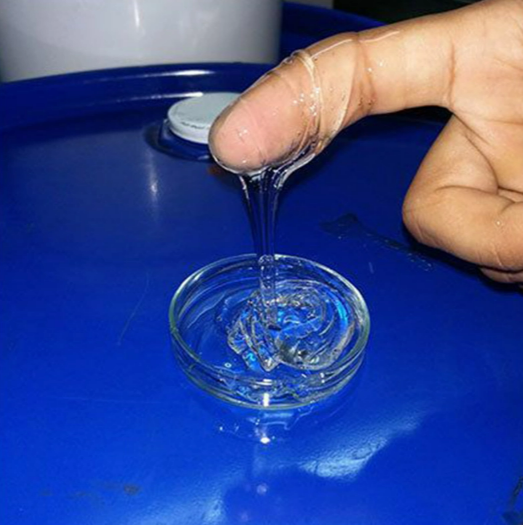
Understanding fluid performance requires a close look at molecular architecture. Petroleum oils rely on carbon-to-carbon bonds. These degrade rapidly when exposed to high thermal stress. Siloxanes utilize a much stronger silicon-oxygen (Si-O-Si) backbone. This structural foundation mimics the heat resistance found in quartz or glass. It allows the fluid to survive intense environments.
The molecular chains also form a unique spiral shape. This configuration creates a high degree of physical "slide" between molecules. It gives the liquid an incredibly low surface tension. You will typically see values hovering between 35 and 40 mN/m. This low tension allows the fluid to spread rapidly. It easily coats complex geometric surfaces without pooling.
These molecular differences translate into massive operational advantages. We see the starkest contrasts in extreme conditions.
Thermal & Oxidative Stability: Standard mineral oils oxidize quickly under continuous heat. They form sticky sludge and hardened carbon deposits. Siloxanes do not carbonize. They remain fluid and stable even when operating near 250°C for extended periods.
Dielectric Strength: Electrical environments demand specialized fluids. Synthetic siloxanes act as brilliant electrical insulators. They resist electrical breakdown under high voltage. This makes them ideal for transformer cooling fluids and intricate electronic potting applications.
Procurement teams often hesitate at the initial purchase price. These synthetic fluids cost more per gallon than bulk hydrocarbon oils. However, viewing the purchase through a Total Cost of Ownership (TCO) lens changes the math entirely. These fluids dramatically extend equipment maintenance intervals. They exhibit near-zero evaporation rates at room temperature. They drastically reduce catastrophic component failures. You spend more upfront, but you save thousands in downtime and replacement parts.
Property | Synthetic Siloxanes | Traditional Mineral Oils |
|---|---|---|
Thermal Stability Limit | Up to 250°C+ | Typically degrades around 150°C |
Oxidation Behavior | Resists sludging, remains clean | Forms carbon deposits and sludge |
Surface Tension | Low (35-40 mN/m) | Moderate to High |
Dielectric Strength | Excellent (Insulator) | Variable, prone to moisture breakdown |
Selecting the right fluid requires more than a basic understanding of physics. Manufacturers engineer different chemical formulations to solve specific industry bottlenecks. You must match the fluid's chemical makeup to your exact application constraints. Doing so prevents costly production errors.
Standard PDMS (Polydimethylsiloxane): This is your baseline engineering choice. It handles general lubrication tasks beautifully. Automotive engineers use it extensively inside viscous couplings. It also serves as a premium thermal transfer fluid. Standard PDMS boasts an impressive working temperature range, operating flawlessly from -50°C up to 200°C and beyond.
Cyclic Silicone Oils: Some applications require a temporary wet phase. Cyclic formulations offer high volatility. They evaporate rapidly at room temperature. Personal care manufacturers rely heavily on them. They allow antiperspirants or temporary industrial coatings to spread easily. Once evaporated, they leave behind a completely dry, non-tacky finish.
Amino-Modified: These variants integrate amino groups into the polymer chain. This modification engineers the fluid for strong substrate adsorption. It drastically increases surface activity. Textile mills and tissue manufacturers choose amino formulations as their primary softeners. The fluid tightly binds to paper fibers. It preserves critical tensile strength while adding an incredibly soft, premium hand-feel.
Fluoro-Modified: Extreme environments demand extreme chemistry. These formulations integrate fluorine directly into the siloxane backbone. The result provides exceptional dual repellency against both water and oil. It also delivers massive chemical resistance against harsh solvents. Heavy-duty automotive components and outdoor gear rely on fluoro-variants for long-term environmental protection.
Chemical composition dictates compatibility. Viscosity dictates mechanical functionality. These synthetic fluids offer an incredibly broad viscosity spectrum. You can specify highly fluid variants as low as 0.65 cSt. You can also source ultra-viscous pastes exceeding 2,000,000 cSt. Notably, this viscosity remains incredibly stable. It barely fluctuates when exposed to sudden temperature shifts.
Thin fluids flow like water. They provide distinct mechanical advantages for precision manufacturing.
Core Strengths: They offer incredibly high flow rates. They provide deep, rapid penetration into tight tolerances. Engineers use them heavily for industrial dipping processes. They also excel at coating delicate medical instruments and protecting intricate electronic micro-assemblies.
Implementation Risks: Thin fluids are notoriously difficult to control manually. They are highly prone to splashing. If dispensed improperly, they easily volatilize into the air. This creates massive workplace contamination hazards.
Thick fluids behave more like honey or molasses. They require deliberate engineering for proper application.
Core Strengths: These grades provide superior thickness retention on vertical surfaces. They deliver incredible high-shear resistance. Automotive engineers use them inside heavy-duty shock absorbers. Industrial molders rely on them for rigorous rubber mold release processes.
Implementation Risks: High-viscosity fluids are notoriously difficult to apply evenly. They exhibit a high potential for "stringing" when the dispensing nozzle pulls away. This leads to excessive fluid waste. They can also easily overload and damage standard mechanical pump systems.
Viscosity Range | Primary Characteristics | Ideal Applications | Common Application Hazards |
|---|---|---|---|
Low (10 - 1,000 cSt) | High flow, deep penetration | Medical dipping, electronics cooling | Splashing, workplace contamination |
Med/High (1k - 10k+ cSt) | High shear resistance, stays in place | Shock absorbers, mold release | Stringing, pump motor overload |
Even the perfect viscosity will fail if the fluid chemically attacks the surrounding hardware. You must rigorously audit every material touching the lubricant. Assuming universal compatibility is a dangerous, costly engineering mistake.
Pneumatic and hydraulic systems rely on rubber O-rings to maintain pressure. Hydrocarbon oils aggressively attack many common rubbers. They cause them to swell, crack, or dissolve. Synthetic siloxanes provide exceptional compatibility with most industrial plastics and rubbers. They cause zero degradation when paired with EPDM, Neoprene, or Nitrile seals. This extends equipment lifespan significantly.
Despite their versatility, these fluids have severe limitations. You must strictly avoid two specific scenarios.
Silicone-on-Silicone: Never use this fluid to lubricate a silicone-based rubber seal. Like dissolves like. The fluid will penetrate the seal matrix. This causes rapid, destructive swelling. The rubber will quickly lose structural integrity and fail.
Metal-on-Metal: These fluids lack the specific extreme-pressure additives found in heavy gear oils. They offer exceptionally poor boundary lubrication for steel-on-steel friction. Using them in heavy metal gearboxes leads to rapid wear. It also causes severe thread galling and mechanical seizing.
Many highly regulated industries cannot use standard industrial-grade fluids. They must meet stringent safety and purity benchmarks. You must specify FDA Silicone Oil when dealing with human contact. Food processing and pharmaceutical manufacturing demand this exact compliance level.
FDA-grade variants undergo rigorous secondary refining. Manufacturers strip out volatile byproducts. They heavily restrict low molecular weight impurities. This intense purification prevents toxic emulsification during delicate clinical applications. Food and beverage plants use these approved variants as non-toxic release agents. They also deploy them safely as anti-foaming drops inside sensitive distillation and fermentation tanks.
Selecting the optimal fluid is only half the battle. How you move that fluid from the barrel to the component dictates your production success. Poor dispensing strategies ruin otherwise perfect engineering designs.
The primary failure point in fluid adoption is almost always inaccurate dispensing. Relying on outdated manual application or incorrect pump styles guarantees failure. It leads to incredibly high rejection rates. It creates messy, hazardous assembly lines. You must treat dispensing hardware as an integral part of your fluid selection process.
Traditional air-spray systems often atomize the fluid poorly. They bounce the lubricant off the target part. You must transition your production line to precision dispensing technologies.
For low viscosity liquids, engineers should adopt precision non-contact jet valves. These valves shoot micro-droplets exactly where needed. They completely eliminate hazardous splashing. For high viscosity pastes, you must install volumetrically controlled extrusion systems. Positive displacement pumps push thick materials consistently. This hardware physically cuts the fluid bead, eliminating messy stringing and expensive fluid waste.
Integrating these fluids into large-scale environments requires careful mathematical modeling. You must calculate the fluid's specific gravity and interfacial tension. These metrics matter deeply when designing closed-loop cooling systems or heavy hydraulic dampening environments. If you ignore these variables, your system will suffer from aeration. Trapped air bubbles degrade thermal transfer efficiency. They also destroy hydraulic dampening resistance. Proper fluid handling prevents aeration and ensures long-term system stability.
Successful fluid integration requires a structured, multi-dimensional approach. Procurement and engineering teams must look past simple price comparisons. You must build a comprehensive decision matrix to ensure long-term reliability.
Balance exact material compatibility against your specific operating environment. Ensure your fluid will not degrade internal O-rings or cause metal-on-metal galling.
Calculate your exact viscosity requirements based on shear resistance and application temperatures. Use low cSt for tight clearances and high cSt for rigorous dampening.
Evaluate advanced chemical modifications. Determine if your application requires the intense chemical resistance of fluoro-variants or the substrate adhesion of amino-variants.
Audit your current factory dispensing hardware. Transition away from outdated air-sprays toward volumetric extrusion or non-contact jetting.
Consult closely with fluid formulation specialists. Let them help you match your target cSt rating to your specific production line machinery.
A: No, it is generally ineffective for metal-on-metal friction. It lacks the boundary lubrication properties required for high-load steel parts. Using it on metal gears can cause parts to seize rapidly. It is designed specifically for plastic-to-plastic or metal-to-plastic/rubber lubrication applications.
A: It is highly safe for most standard industrial rubbers like Nitrile, Neoprene, or EPDM. However, you must never use it on silicone-based O-rings. The similar chemical structure will dissolve the seal, causing it to swell destructively and ultimately fail.
A: Pure siloxane fluids are highly resistant to combustion under extreme compression. Unlike petroleum-based oils, they will not ignite under pressure. This critical property prevents the dangerous "dieseling" or explosion effect frequently seen in high-pressure pneumatic systems and airguns.
A: FDA-grade variants undergo rigorous secondary refinement. This intense process removes toxic impurities and volatile low molecular weight byproducts. This strict purification ensures they are entirely safe for incidental food contact, pharmaceutical processing, and sensitive medical device lubrication.


